

Media release

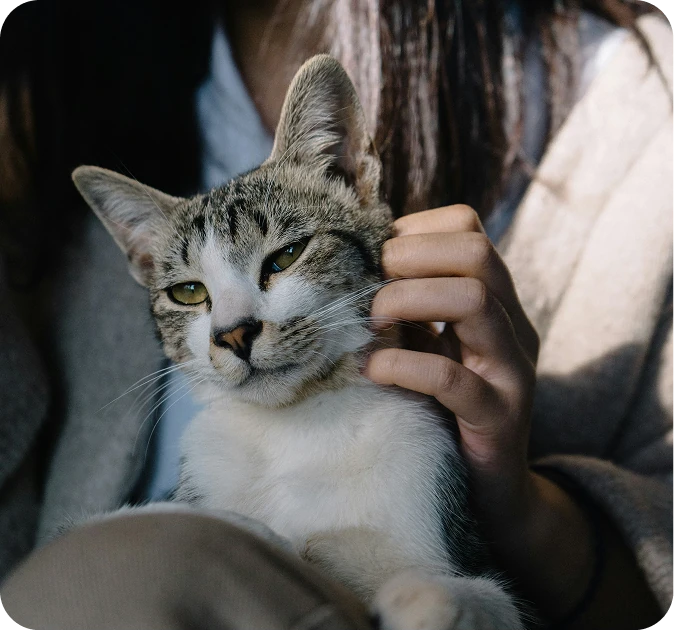
Australia is unquestionably a nation of pet lovers. Pets are no longer simply animals that share our homes. They are companions, sources of emotional support and for many Australians, fully fledged members of the family.
Australians love their pets, so why don’t more of them have cover?
We have one of the highest rates of pet ownership in the developed world. An estimated 31.6 million pets now live in 7.7 million Australian households, meaning 73% of homes have at least one pet. ¹
Although Australians spend approximately $21.3 billion each year feeding, caring for and looking after our pets, only around one in four dogs and one in seven cats are insured. The question we need to ask is why does pet insurance still lag behind? ¹
The disconnect matters – not only to insurers, but to pet owners, veterinarians and the broader animal healthcare sector.

31.6M
estimated pets in Australia ¹

7.7M
Australian households with pets¹

73%
of homes have at least one pet¹
The cost of being uninsured
Pet insurance is often discussed as another financial product competing for space in already stretched household budgets. But that description misses its broader purpose. At its best, pet insurance enables owners to make healthcare decisions based on what is right for their pet, rather than what they can afford at a particular moment.
Australians rightly expect Medicare to be there when they need it. Our pets have no such system. Their access to care depends predominantly on their owners’ capacity to pay.” When a pet becomes seriously ill or is injured, the owner can suddenly face a bill running into thousands of dollars. There may be little warning and very little time to arrange the money.
For an owner sitting in a veterinary consultation room, this can turn a medical decision into a financial crisis. Many Australians choose to ‘self-insure’ their pets, setting aside money each month for future veterinary bills. But savings take time to build, and too many owners underestimate just how expensive treatment can be until they’re faced with an emergency.
Suddenly, the options become putting it on a credit card, dipping into savings, or making difficult decisions under pressure.
The question is no longer simply: “What treatment gives my pet the best chance?”
It becomes: “What treatment can I afford?”


What mature markets can teach us
Sweden has one of the most mature pet insurance markets in the world, with The Swedish Kennel Club estimates that approximately 90 per cent of dogs are insured. The country has had a pet insurance culture for generations, enabling insurance to become an expected part of responsible pet ownership rather than a product considered only after a health problem arises.²
The United Kingdom also has a well-established market. In 2023, a record 4.4 million UK pet owners held cover. Insurers handled 1.8 million claims and paid £1.2 billion towards the treatment of sick and injured pets. The average claim was £668, almost 50% higher than the average annual policy cost reported by the Association of British Insurers. ³
These markets are not perfect, nor can their models simply be copied and applied to Australia. But they demonstrate what happens when pet owners understand the role of pet insurance and have confidence that it will support them when it matters.
Our lack of insurance uptake is not evidence that Australians care less about their pets. It points to unresolved questions about affordability, accessibility, trust and perceived value.
The industry must address the barriers
Cost is clearly a significant issue.
Australian research conducted in 2026 shows that one in three Australian pet owners have delayed vet care because they couldn’t afford it, with a growing proportion also questioning whether it represents value, particularly cat owners, where this concern increased significantly between 2022 and 2025. ¹,⁴
These cannot simply be dismissed as consumer misunderstanding. They present a clear challenge for the industry, which must do a better job of helping pet owners understand how premiums, excesses, reimbursement percentages and annual benefit limits work together.
Flexibility is also critical. When RSPCA Pet Insurance relaunched with a new strategic partner and underwriter in April, we introduced a customisable protection plan that enables customers to tailor their cover to their pet’s needs and budget, rather than being restricted to rigid, pre-packaged tiers. We also tried to make policy language clearer.
Terms such as waiting periods, pre-existing conditions, exclusions, benefit limits and sub-limits can be confusing, particularly for someone purchasing pet insurance for the first time.
When consumers do not understand what is covered, they are more likely to be disappointed at claim time. That damages confidence, not only in one policy or insurer, but in the entire category. Transparency must therefore extend beyond the product disclosure statement. Insurers should explain coverage in plain language before a customer purchases a policy and make it easier for owners and veterinarians to determine whether a proposed treatment is likely to be covered.
The claims experience is equally important.
Historically, many pet insurance products required owners to pay the entire veterinary bill upfront and wait to be reimbursed. For a household without several thousand dollars readily available, that structure can limit the practical value of insurance at precisely the moment it is needed.
The industry is moving towards digital claims, faster pre-approvals and direct payment solutions such as our Direct2Vet system which pays veterinary clinics directly within minutes, leaving the owner to only pay the difference between their bill and what they are covered for. These solutions should be the standard and not the exception.


Better access leads to better healthcare decisions
The consequences of underinsurance extend beyond unexpected emergency bills. RSPCA-commissioned research earlier this year highlighted that delaying vet care is affecting Australians across all income levels. Around one in four households earning $699 a week had delayed veterinary care, rising to one in three among households earning more than $3,000 a week. ⁴
Delayed care can cause manageable health problems to become more serious, more painful and ultimately more expensive to treat.
As veterinary medicine continues to advance, treatments that were once unavailable are giving pets longer and healthier lives. Those advances inevitably come at a cost. Higher uptake can help owners seek advice sooner, improve treatment acceptance and support better adherence to veterinary care plans. It can give veterinarians greater freedom to discuss the clinically appropriate options without immediately having to reduce those options according to the owner’s available cash.
For veterinary practices, this may support more consistent patient care, earlier intervention and stronger preventative health programs. It can also reduce some of the emotional pressure placed on veterinary teams when clinically treatable animals cannot receive care because of financial limitations.
Increasing uptake requires a collective effort
Australia does not have a pet-loving problem. We have a pet protection problem.
Most of us would not consider driving a car without insurance, yet too many pet owners remain unprotected against potentially significant veterinary costs.
While increasing uptake should not mean convincing every Australian that the most expensive policy is the right one, the objective should be to ensure that more owners can access appropriate protection for unexpected veterinary emergencies.
This will require insurers to offer greater flexibility and transparency. It will require simpler cover options, clearer communication, efficient claims processes and payment systems that work at the point of care.
Most importantly, the industry must earn consumer confidence.
This is why RSPCA Pet Insurance is on a mission to help close Australia’s pet protection divide. Through our ongoing marketing and communications, we want to better educate pet owners to ensure that fewer decisions are made based on price alone.
That benefits pet owners. It supports veterinary professionals. It creates a more sustainable insurance market. Above all, it gives more Australian pets the opportunity to receive the care they need, when they need it.
About RSPCA Pet Insurance
RSPCA Pet Insurance is a purpose-driven strategic partnership between RSPCA Australia and Pacific International Insurance, designed to protect and improve the wellbeing of pets while also helping contribute funding to RSPCA animal welfare initiatives nationwide. With over 150 years of RSPCA expertise in animal care, advocacy, and veterinary knowledge, our customisable product offers transparent, flexible coverage that can be tailored to pet owners’ needs and budgets, with premiums helping support RSPCA initiatives such as rescue, rehabilitation, rehoming, education, and law enforcement efforts for animals in need. Guided by a vision of a world where pets can live well and be well, RSPCA Pet Insurance combines empathy, expertise, and innovation to help make pet insurance accessible and impactful. For more information, visit rspcapetinsurance.org.au
Media contacts:
Leandri Smith | Evolab | leandri@evolab.com.au | 0433 900 356
Azelle Evans | Evolab | azelle@evolab.com.au | 0451 710 095
References:
- Animal Medicines Australia – Pets in Australia: A national survey of pets and people 2025 https://animalmedicinesaustralia.org.au/resources/pets-in-australia-a-national-survey-of-pets-and-people-3/
- Svenska Kennelklubben – Breeding Dogs in Sweden https://www.skk.se/globalassets/media—skk.se/engelska-dokument–andra-sprak/breeding-dogs-in-sweden-j40.pdf
- Association of British Insurers- Insurance payouts for pets top £1 billion for third consecutive year https://www.abi.org.uk/news/news-articles/2025/5/insurance-payouts-for-pawly-pets-top-1-billion-for-third-year-in-a-row/
- The RSPCA polling was conducted by McCrindle Research and was in the field from 11 to 23 March 2026. A nationally representative 1,014 Australians were surveyed
