Care & training

This article provides general information only and is not a substitute for personalised veterinary advice. Always speak with your vet about your pet’s individual health needs. Accurate as at 30 October 2026.
Teaching your dog useful skills can be a rewarding part of training, and no, you don’t need to be a professional dog trainer to get started. With a handful of tasty treats, a little patience, and plenty of praise, you can practise a range of useful skills right at home.
Training can also benefit your dog. It can provide mental stimulation and help to strengthen the relationship between you and your dog. Here are 7 useful skills you can teach your dog at home using kind, reward-based methods, plus a few tips to set you both up for success.
Table of contents
- The golden rules of dog training
- Skill 1: Sit
- Skill 2: Come (recall)
- Skill 3: Drop (lie down)
- Skill 4: Stay
- Skill 5: Shake (give paw)
- Skill 6: Drop it
- Skill 7: Touch (nose target)
- From training to pet insurance: looking after your dog
The golden rules of dog training
Before we get to the specific skills, it’s worth covering a few training basics. After all, how you train your dog matters just as much as what you teach them. The RSPCA recommends reward-based training using positive reinforcement, where your dog is rewarded for desirable behaviour. Using rewards your dog values can help keep them engaged in training and encourage the behaviours you want to see.
Here are a few key principles to keep in mind:
- Reward the behaviours you want to see. Reward your dog when they show desirable behaviour, so they are motivated to repeat it. Avoid punishment and aversive training methods or equipment, which can cause fear and distress and compromise your dog’s welfare.
- Keep sessions short and positive. Keep training sessions short and regular and aim to finish while your dog is still engaged in the training.
- Choose rewards your dog values. Different dogs may find different things rewarding, such as food, toys, or praise. High-value rewards can be useful when teaching more challenging skills or working around distractions.
- Be patient and consistent. Every dog learns at their own pace, so don’t measure success by speed. Use consistent cues when practising a skill and give your dog time to learn what you’re asking of them.
Right, treats at the ready? Let’s begin.
Skill 1: Sit
A great place to start, and a useful skill for everyday life. Hold a treat near your dog’s nose, then slowly move it up and back over their head. As they follow the treat, their bottom may lower to the floor. As soon as they sit, say ‘yes’, give them the treat, and offer plenty of praise. With practice, you can introduce the word ‘sit’ as they begin to make the movement.
Skill 2: Come (recall)
Teaching your dog to come when called is one of the most important skills they can learn, especially when it comes to keeping them safe. Start somewhere quiet with few distractions. Crouch down, call your dog’s name followed by ‘come’, and use a happy, encouraging voice. When they come to you, reward them with a treat and praise.
As they become more confident, gradually increase the distance between you and your dog and practise in places with more distractions, using their favourite treats to keep them motivated. When practising outside, start recall training in a secure, enclosed area, such as your backyard. Only let your dog off lead where it is safe and legally permitted, and once they are reliably responding to your recall cue. Remember, coming back to you should always be a positive experience, so avoid scolding your dog if they take a little longer to return.
Skill 3: Drop (lie down)
Start with your dog in a sitting position. Hold a treat near their nose, then slowly lower it to the floor and move it forward. As they follow the treat, they may lower themselves into a lying position. Once they’re lying down, say ‘yes’, give them the treat, and offer plenty of praise. When they’re comfortable with the movement, you can introduce the word ‘drop’ or ‘down’. Be patient, as this one might take a little practice.
Skill 4: Stay
Once your dog is comfortable sitting or lying down on cue, you can start teaching them to stay. Ask your dog to ‘sit’ or ‘drop’, then take a small step back. Return straight away and reward them if they’ve stayed in position. Gradually increase the distance and time, making sure to return to your dog to reward them rather than calling them over. Keep practising in short sessions and build up slowly as their confidence grows.
Skill 5: Shake (give paw)
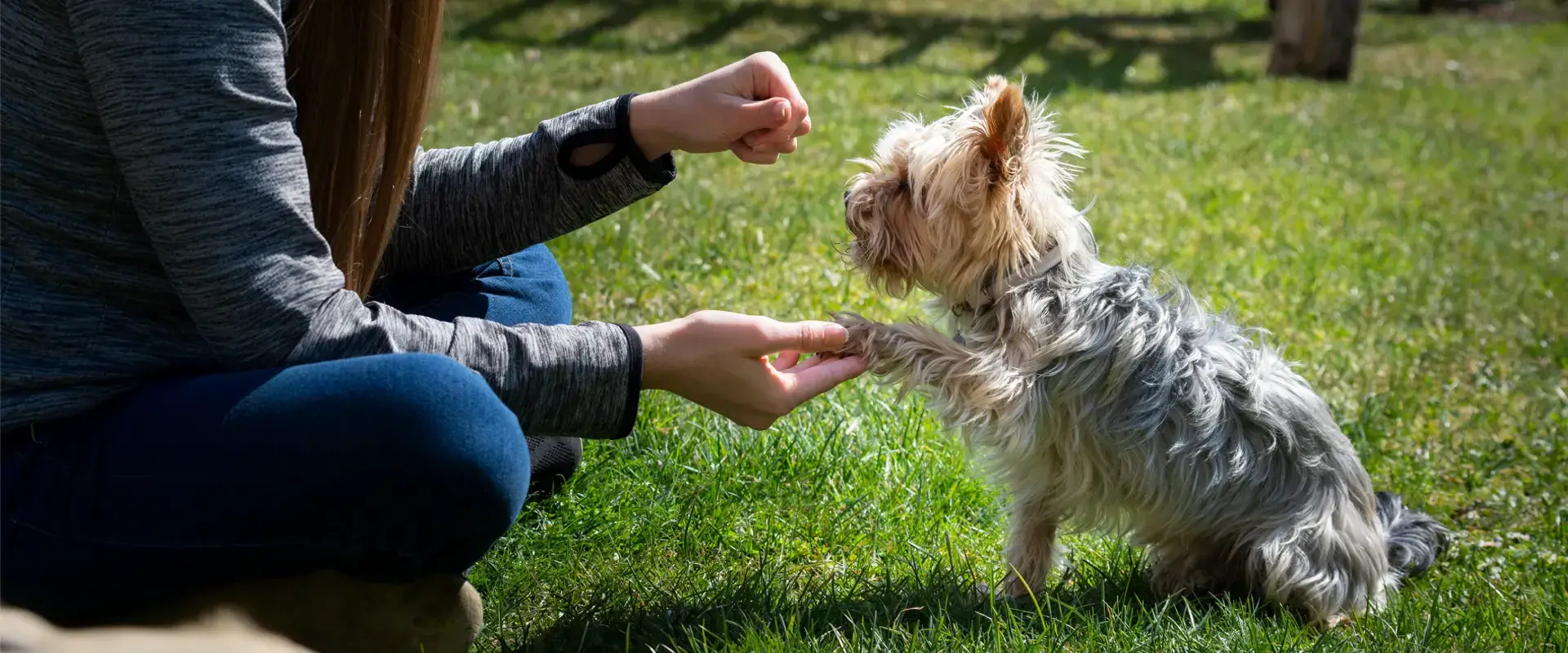
Unlike some of the practical skills above, shake or ‘give paw’ is more of a fun trick to teach your dog. Start with your dog in a sitting position and hold a treat in your closed hand near their paw. Some dogs may naturally lift a paw to investigate. As soon as they lift their paw, say ‘yes’, open your hand, and give them the treat. Once they’re doing this consistently, introduce the word ‘shake’. With practice, you can offer your open hand for them to place their paw in.
Skill 6: Drop it
Teaching your dog to ‘drop it’ is a useful skill that can help keep them safe if they pick up something they shouldn’t. Start by giving your dog a toy, then offer them a tasty treat in exchange. As they let go of the toy to take the treat, say ‘drop it’ and reward them. With regular practice, your dog can learn that letting go of something is a positive experience. Avoid chasing or snatching things from them, and keep each exchange calm and rewarding.
Skill 7: Touch (nose target)
Touch, or nose targeting, is a simple, useful skill where your dog learns to touch their nose to your hand. Start by holding your open palm near your dog’s nose. If they touch your palm with their nose say ‘yes’ and reward them with a treat. Once they’re doing this consistently, introduce the word ‘touch’.
From training to pet insurance: looking after your dog
Teaching and practising useful skills with your dog can be a great way to spend time together, provide mental stimulation, and strengthen your relationship. Keep training sessions short and positive, celebrate their progress, and remember that every dog learns at their own pace.
Alongside regular training, exercise, and vet care, pet insurance is another way to look after your dog, and helps to cover eligible vet bills when your pup gets ill or injured unexpectedly. And with RSPCA Pet Insurance, you can also customise your dog’s cover to suit their needs and your budget.
The best part? Every policy contributes to the RSPCA’s animal welfare work. So, while you’re helping to protect your own pup, you’re also making a difference for animals in need across Australia.
To learn more about how RSPCA Pet Insurance could support you and your dog, explore our dog insurance. Or, if you’re ready to take the next step, you can fetch a commitment-free pet insurance quote online.
Disclaimer
As with any insurance, terms, conditions, and exclusions apply. Please read the Product Disclosure Statement to make sure this cover suits your needs.
References
[1] RSPCA Australia. What is reward-based dog training and why does the RSPCA support it? Available from: https://kb.rspca.org.au/categories/companion-animals/dogs/training/what-is-reward-based-dog-training-and-why-does-the-rspca-support-it
[2] RSPCA Australia. Is it important to train my dog? What sort of training would you recommend? Available from: https://kb.rspca.org.au/categories/companion-animals/dogs/training/is-it-important-to-train-my-dog-what-sort-of-training-would-you-recommend
[3] RSPCA Australia. How can I teach my dog recall (to come when called)? Available from: https://kb.rspca.org.au/categories/companion-animals/dogs/training/how-can-i-teach-my-dog-recall-to-come-when-called
[4] RSPCA Australia. Why is enrichment important for dogs? Available from: https://kb.rspca.org.au/categories/companion-animals/dogs/caring-for-my-dog/why-is-enrichment-important-for-dogs
[5] RSPCA (England and Wales). Teach your dog to lie down. Available from: https://www.rspca.org.uk/adviceandwelfare/pets/dogs/training/liedown
[6] RSPCA (England and Wales). Teach your dog to stay. Available from: https://www.rspca.org.uk/adviceandwelfare/pets/dogs/training/stay
FAQs
The RSPCA recommends reward-based training built on positive reinforcement, rewarding the behaviours you want with something your dog values, like a tasty treat, praise, or a favourite toy. Reward-based training is effective and can help strengthen the relationship between you and your dog. Avoid punishment and aversive methods or training equipment, as these can cause fear and distress and compromise your dog’s welfare.
Keep training sessions short and regular and aim to keep them positive and rewarding for your dog. End each session while your dog is still engaged and enjoying the training.
Teaching your dog useful skills through reward-based training can provide mental stimulation and help them learn behaviours that are useful in everyday life. Some skills such as recall, stay, and drop it can help keep your dog safe. Keep training positive and work at a pace that suits your individual dog.
Try moving somewhere calmer with fewer distractions, using a higher-value treat, and breaking the skill into smaller steps. Keep sessions short and positive and never punish your dog if they make a mistake. If your dog is struggling or losing interest, take a break and try again later. You could also consider attending reward-based dog training classes for additional guidance and support.