
Care & training

This article provides general information only and is not a substitute for personalised veterinary advice. Always speak with your vet about your pet’s individual health needs. Accurate as at 25 September 2026.
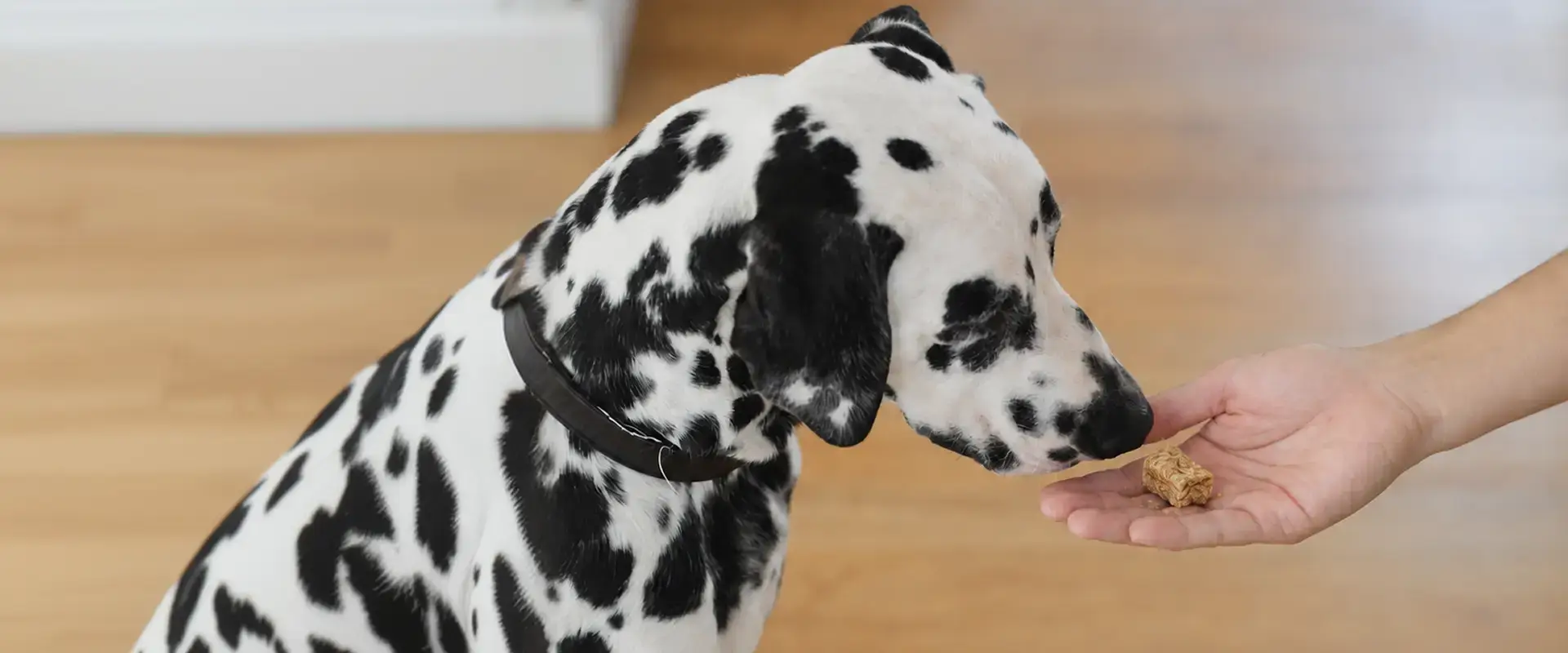
It’s a familiar breakfast scene: there’s a spare Weet-Bix going soggy in the bowl, and a hopeful dog sitting nearby, wondering if it might be theirs.
But can dogs actually eat Weet-Bix? While plain Weet-Bix isn’t typically toxic to dogs, there’s no recognised amount that’s safe for dogs, and it’s not a food they need. There are also a few ways it can go wrong, from the milk it’s served with to flavoured versions like Weet-Bix Bites.
Here’s what’s actually in Weet-Bix, why it’s not an ideal treat for dogs, and some safer ways to spoil your pup instead.
Table of contents
- Can dogs eat Weet-Bix? The quick answer
- What’s in Weet-Bix?
- Why Weet-Bix isn’t an ideal treat for dogs
- What about Weet-Bix with milk?
- Never give your dog chocolate Weet-Bix Bites
- Safer treat options
- When to talk to your vet
- How pet insurance may support your dog’s health and wellbeing
Can dogs eat Weet-Bix? The quick answer
Plain Weet-Bix isn’t typically toxic to dogs. But that’s different from it being recommended: there’s no specific guidance on what amount of Weet-Bix is safe for your dog, and it’s not a food they need.
Weet-Bix is made for people, not pets, so it’s best kept as a rare treat rather than part of your dog’s regular routine. And if your dog has a wheat sensitivity, is overweight, or lives with a health condition, it’s best to skip it altogether.
What’s in Weet-Bix?
Weet-Bix is a wholegrain wheat biscuit cereal. The original variety is made mostly from wholegrain wheat, with a small amount of raw sugar, salt, and malt extract, plus added vitamins and iron.
It’s a fairly plain, low-sugar cereal by breakfast standards, which might explain why it’s easy to assume it’s harmless for dogs too. But ‘not toxic’ and ‘good for your dog’ are two different things. Dogs fed a nutritionally balanced diet don’t need sugary or salty human foods as extras, and food made for humans is rarely a great match for a dog’s nutritional needs.
Why Weet-Bix isn’t an ideal treat for dogs
An occasional bite of Weet-Bix may not seem like much, but there are a few reasons it’s not an ideal treat for dogs, especially if it starts becoming a regular habit.
Added sugar and calories
Any treats or human food you give your dog, including Weet-Bix, should make up less than 10% of their daily calorie intake. That’s the general guidance from the World Small Animal Veterinary Association (WSAVA), which also cautions that human food and table scraps can unbalance a dog’s diet and contribute to weight gain over time.
The Australian Veterinary Association (AVA) similarly flags obesity as a disease on the rise in pets, with serious implications for pet health, and one that a vet is best placed to help you manage.
Salt content
Weet-Bix also contains a small amount of added salt. Dogs don’t need extra sodium in their diet, so there’s little reason to add more through a human breakfast cereal, even in small amounts.
Wheat and grain sensitivities
Wheat is one of the more common food sensitivities seen in dogs, alongside beef, dairy, chicken, and lamb.
If your dog has a known grain or wheat sensitivity, or you notice signs such as itchy skin, ear infections, or an upset tummy after they’ve eaten it, Weet-Bix is best avoided altogether. If you spot any of these signs, it’s worth booking a check-up with your vet.
What about Weet-Bix with milk?
Because Weet-Bix usually comes with milk, this one deserves a mention of its own. Dairy is another common food sensitivity in dogs, and milk can cause gastrointestinal upset in dogs, so it’s generally best to avoid it. If you’re offering a small piece of Weet-Bix as an occasional treat, it’s safer served dry or softened with a little water instead.
Never give your dog chocolate Weet-Bix Bites
Some Weet-Bix Bites varieties, like Choc Crunch, contain compound chocolate pieces with cocoa solids, as well as cocoa powder. Cocoa contains theobromine, a compound that’s toxic to dogs.
Signs of chocolate poisoning may include:
- Restlessness or hyperactivity
- Vomiting or diarrhoea
- A fast heart rate
- Muscle tremors
- Seizures
These chocolate varieties should never be given to dogs, and any chocolate products are best kept out of your dog’s reach. If your dog does manage to get into some, contact your vet or an emergency vet immediately.
Safer treat options
If you’re looking for a simple treat for your pup, there are plenty of options that are better suited to dogs than human breakfast cereal.
Depending on your dog’s individual needs, these may include:
- Small amounts of tinned fish
- Cooked chicken or lamb (boneless and free of onion, garlic, or seasoning)
- Cooked pumpkin or carrot
- A little plain cooked rice or pasta
Your vet can help you choose treats that suit your dog’s size, age, and health needs. Whatever you choose, balance matters. A complete, good-quality commercial dog food should remain the foundation of your dog’s diet, with treats making up only a small part of what they eat.
When to talk to your vet
Every dog is different. If yours is overweight or has diabetes, a known food sensitivity, or any ongoing health condition, check with your vet before offering any new food, including Weet-Bix. Your vet can also help you choose suitable treats and work out how much is right for your dog. And if your dog shows signs of illness after eating something new, such as vomiting, diarrhoea, or lethargy, it’s best to get them checked over rather than waiting to see what happens.
How pet insurance may support your dog’s health and wellbeing
Most of the time, a curious dog getting into the wrong snack ends with little more than an unimpressed look and a quick clean-up. Sometimes, a trip to the vet is needed, whether that’s for an upset tummy, an allergic reaction, or something more serious, like chocolate poisoning.
Pet insurance can help take some of the pressure off when these moments happen, covering a portion of eligible vet costs so you can focus on your dog’s recovery rather than the bill.
With RSPCA Pet Insurance, you can customise your dog’s cover to suit their needs and your budget. And with every policy contributing to vital RSPCA animal welfare initiatives, it’s protection with purpose. For your own pup and thousands of others across Australia.
To learn more about how an RSPCA dog insurance policy could support you and your dog, click here. Or, if you’re ready to take the next step, you can fetch a commitment-free pet insurance quote online.
Disclaimer
As with any insurance, terms, conditions, and exclusions apply. Please read the Product Disclosure Statement to make sure the cover suits your needs.
References
[1] RSPCA Australia. What should I feed my dog? RSPCA Knowledgebase. Available from: https://kb.rspca.org.au/categories/companion-animals/dogs/caring-for-my-dog/what-should-i-feed-my-dog
[2] RSPCA Australia. Why is chocolate toxic to dogs and other animals? RSPCA Knowledgebase. Available from: https://kb.rspca.org.au/categories/companion-animals/household-and-garden-dangers/why-is-chocolate-toxic-to-dogs-and-other-animals
[3] Australian Veterinary Association. Nutrition of dogs and cats. Available from: https://www.ava.com.au/policy-advocacy/policies/companion-animals-management-and-welfare/nutrition-of-dogs-and-cats/
[4] WSAVA Global Nutrition Committee. Feeding treats to your dog. Available from: https://wsava.org/wp-content/uploads/2025/11/WSAVA_GuidetoTreats_Dogs_251107.pdf
[5] MSD Veterinary Manual. Cutaneous Food Allergy in Animals. Available from: https://www.msdvetmanual.com/integumentary-system/food-allergy/cutaneous-food-allergy-in-animals
[6] Weet-Bix. Weet-Bix 1.2kg. Available from: https://weetbix.com.au/products/weet-bix/Original-1.2kg
[7] Weet-Bix. Weet-Bix Bites Choc Crunch. Available from: https://weetbix.com.au/products/weet-bix-bites/Choc-Crunch-500g
FAQs
Plain Weet-Bix isn’t toxic to dogs, but that doesn’t mean it needs a spot in their breakfast bowl. There’s no vet-backed guidance on how much Weet-Bix is safe for your dog, and dogs don’t need Weet-Bix as part of their diet.
If you’re thinking about sharing a little with your dog, it’s best to check with your vet first, particularly if your pup has any health conditions, allergies, or sensitivities.
It’s best to leave the milk out. Dairy is a common food sensitivity for dogs, and milk can cause an upset tummy for some pups. If you do need to soften Weet-Bix, a little water is the safer option.
No, Weet-Bix Bites Choc Crunch contains compound chocolate pieces and cocoa powder. Cocoa contains theobromine, which is toxic to dogs. If your dog has eaten a chocolate product, contact your vet or an emergency vet straight away for advice.
It can be. Wheat is a common food sensitivity in dogs, so a wheat-based cereal such as Weet-Bix may not be a good choice for a dog with known allergies or food sensitivities.
Every dog is different, so if you’re unsure what foods or treats are suitable for yours, have a chat with your vet.
It can depend on what your dog has eaten, why they need vet treatment, and the terms of your policy. With RSPCA Pet Insurance, accidental ingestion is covered, subject to the terms, conditions, limits, and exclusions of your specific policy.
To learn more, visit the RSPCA Pet Insurance website or get a commitment-free quote online today.
As with any insurance, terms, conditions, and exclusions apply. Please read the Product Disclosure Statement to make sure this cover suits your needs.