Care & training

This article provides general information only and is not a substitute for personalised veterinary advice. Always speak with your vet about your pet’s individual health needs. Accurate as at 25 September 2026.
Cat collars can help keep your cat safe and make them easier to identify if they wander off. But not every collar is created equal. The wrong design can actually put your cat at risk, so it’s worth knowing what to look for before you buy one.
Thankfully, choosing a safe cat collar doesn’t have to be complicated. Once you know what to look for, and how a collar fits into the bigger picture alongside ID tags and microchipping, you can make a choice you feel confident about.
Here’s what you need to know about the different types of cat collars, what makes one safe, how to get the fit right, and how collars work alongside other forms of identification.
Table of contents
- What are cat collars for?
- Are breakaway cat collars safer than standard collars?
- Do cats need an ID tag?
- Can a bell on your cat’s collar help protect wildlife?
- Should indoor cats wear a collar too?
- How should a cat collar fit?
- Pet insurance and its role in your cat’s care
What are cat collars for?
A collar is one of the simplest ways to show that a cat is owned, rather than a stray. The RSPCA recommends that cats also wear external identification, in the form of a collar and tag, where this is safe and tolerated by your cat.
A collar also gives you somewhere to attach an ID tag with your contact details. So, if your cat wanders from home, whoever finds them has an easy way to get in touch.
Of course, not every cat will tolerate wearing a collar, and safety always comes first. That’s why the type of collar you choose matters just as much as whether your cat wears one at all.
Are breakaway cat collars safer than standard collars?
Yes, breakaway, or quick-release, collars are generally considered a safer option for cats. They’re designed to release if the collar gets caught on something, such as a fence paling or tree branch, helping to reduce the risk of your cat becoming trapped or injured.
Non-stretch collars with fixed buckles are best avoided, along with stretch collars that have lost their elasticity over time. These types of collars can increase the risk of your cat getting caught or getting a leg stuck.
Breakaway (quick-release) collars
A breakaway collar has a clip designed to release under pressure. So, if your cat’s collar snags on something, it should pop open rather than tighten or hold firm. It’s a good habit to check that the release mechanism is still working properly and hasn’t become stiff or stuck over time.
Elastic or stretch collars
Some collars have a stretchy panel instead of a breakaway clip. While this can provide some give if the collar gets caught, the RSPCA cautions that elastic can lose its stretch as it ages. That means a collar that once offered some flexibility may no longer do so. Regularly checking the condition of any cat collar, stretch or otherwise, is important.
Do cats need an ID tag?
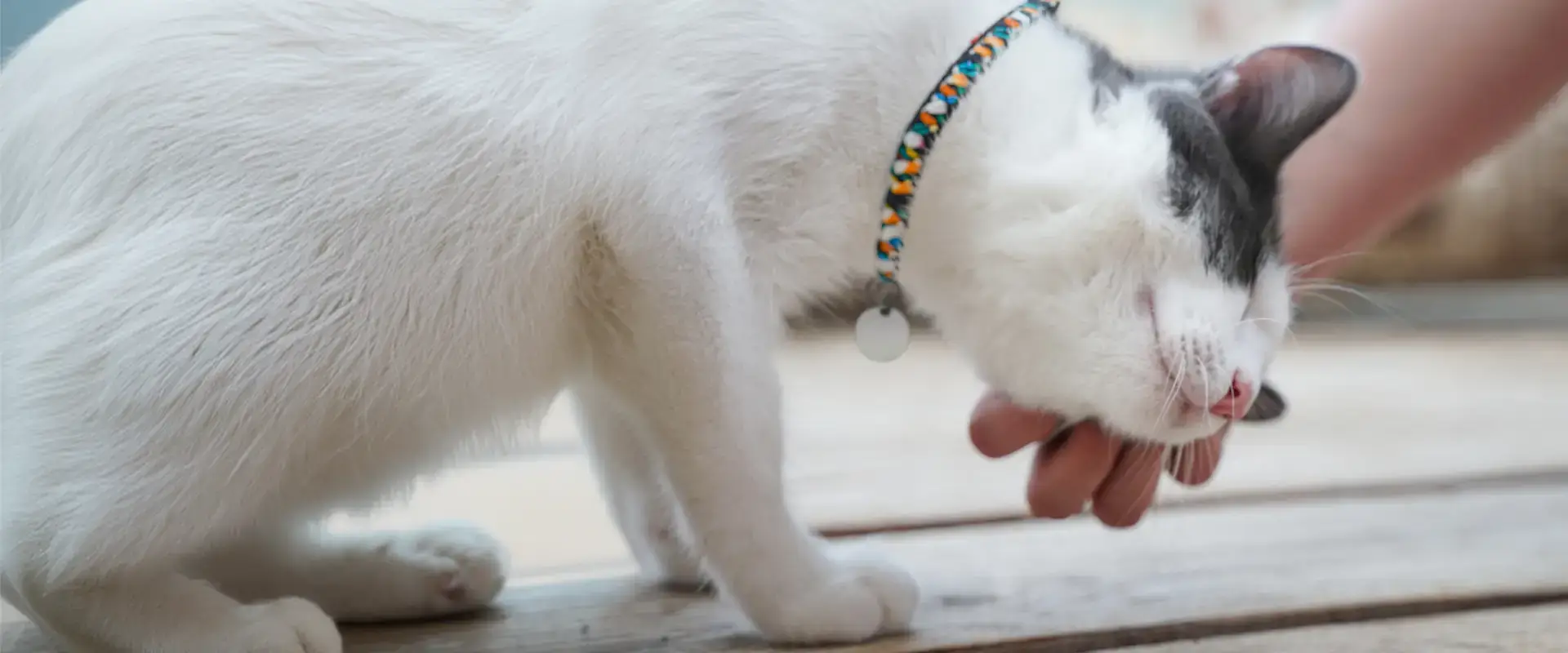
Yes, an ID tag is one of the simplest ways to show that your cat has an owner and help someone contact you if they’re found wandering. Options range from a simple engraved tag to an embroidered collar or GPS tracker.
Whatever you choose, it’s best to think of a collar and ID tag as one part of your cat’s identification rather than relying on them alone.
Microchipping provides a more permanent form of identification if your cat’s collar comes off or their tag goes missing. It’s also mandatory in most Australian states and territories, although requirements may vary depending on where you live. If your cat is microchipped, remember to keep your contact details on the relevant microchip registry up to date so you can be contacted if they’re lost and found.
Can a bell on your cat’s collar help protect wildlife?
A bell on your cat’s collar may help protect local wildlife by alerting potential prey that your cat is nearby, giving them a better chance to escape. Other options, such as brightly coloured collar covers, anti-pounce bibs, or ultrasonic beepers, may also make it harder for cats to approach wildlife unnoticed.
However, cats can adapt their stalking behaviour to minimise these sounds or visual warnings, so these devices aren’t foolproof. If you want to help protect local wildlife, keeping your cat safe at home is a more reliable option.
Should indoor cats wear a collar too?
It’s a fair question. After all, indoor cats don’t face the same day-to-day risks as cats who roam outdoors.
But even the most content indoor cat can slip through an open door or window, so having identification can be helpful if they unexpectedly find themselves outside. A collar with an ID tag gives someone a quick way to identify your cat and contact you if they’re found.
Microchipping provides a more permanent form of identification if your cat’s collar or tag comes off or goes missing. Keeping your contact details on the relevant microchip registry up to date can also help you and your cat be reunited if they’re ever lost.
How should a cat collar fit?
Choosing the right collar for your cat is only half the story. Getting the fit right is just as important for your cat’s comfort and safety.
As a general rule, you should be able to comfortably fit one large finger, or two small fingers, between the collar and your cat’s neck. Too loose, and there’s a greater chance your cat could get a leg caught in it. Too tight, and the collar could be uncomfortable or rub against their skin.
It’s a good idea to check the fit and condition of your cat’s collar regularly, particularly if you have a kitten who’s still growing. Look for signs of wear and tear, and make sure the collar still fits comfortably as your little feline gets bigger.
Pet insurance and its role in your cat’s care
Even with a well-chosen, well-fitted collar, accidents can still happen. And if your cat is ever injured, whether that’s related to their collar or something else entirely, a trip to the vet can come with an unexpected bill.
That’s where pet insurance may be able to help, covering a portion of your eligible vet bills so you’re not left to face them alone.
With RSPCA Pet Insurance, your cat’s not only covered for eligible injuries and illnesses, but you can also customise their cover to suit their needs and your budget. Simply choose the annual cover limit, benefit percentage, excess, and optional extras that work for you.
Every policy also contributes to the RSPCA’s vital work. So, while you’re helping to protect your own feline companion, you’re also supporting animals in need across Australia.
To learn more about how RSPCA Pet Insurance could support you and your cat with cat insurance, click here. Or, if you’re ready to take the next step, you can fetch a commitment-free pet insurance quote online.
Disclaimer
As with any insurance, terms, conditions, and exclusions apply. Please read the Product Disclosure Statement to make sure the cover suits your needs.
References
[1] RSPCA Australia. What type of cat collar should I use? RSPCA Knowledgebase. Available from: https://kb.rspca.org.au/categories/companion-animals/cats/general/what-type-of-cat-collar-should-i-use
[2] RSPCA Australia. How can I be a responsible cat owner? RSPCA Knowledgebase. Available from: https://kb.rspca.org.au/categories/companion-animals/cats/general/how-can-i-be-a-responsible-cat-owner
[3] RSPCA Australia. The importance of microchipping pets. Available from: https://www.rspca.org.au/latest-news/blog/importance-microchipping-pets/
FAQs
A collar with a breakaway or quick-release clip is generally considered a safer choice for cats. It’s designed to release if the collar gets caught on something, helping to reduce the risk of your cat becoming trapped or injured. Adding an ID tag can also help your cat be identified if they wander from home. It’s best to avoid non-stretch collars with fixed buckles, as well as stretch collars that have lost their elasticity over time.
Putting a bell on your cat’s collar may help protect local wildlife by warning potential prey when your cat is nearby, giving them a better chance to escape. Other options, such as brightly coloured collar covers or anti-pounce bibs, may also help. However, cats can adapt their stalking behaviour, so these measures aren’t foolproof. Keeping your cat safely contained at home is another way to help protect both your cat and local wildlife.
It’s a good idea to use both. A collar with an ID tag gives people a quick and easy way to identify your cat and contact you, while a microchip provides a more permanent form of identification if their collar or tag goes missing. Microchipping is also mandatory in most Australian states and territories, although requirements may vary depending on where you live.
As a general rule, you should be able to fit one large finger, or two small fingers, comfortably between the collar and your cat’s neck. Be sure to check the fit and condition of their collar regularly, especially if you have a growing kitten.
Pet insurance may cover treatment for an injury involving a cat collar, depending on the policy, how the injury occurred, and any applicable exclusions or conditions.
With RSPCA Pet Insurance, eligible injuries are covered, subject to the terms of your policy. You can also customise your cover to suit your cat’s needs and your budget, with annual cover limits up to $35,000, benefit percentage options up to 90%, a zero excess option, and a wide range of optional extras.
To learn more, visit the RSPCA Pet Insurance website or get a commitment-free quote online today.
As with any insurance, terms, conditions, and exclusions apply. Please read the Product Disclosure Statement to make sure this cover suits your needs.