Facts & fun

Have you ever watched your cat’s tail and wondered what it was trying to tell you?
Cats are subtle communicators. From the tip of their tail to the position of their ears, every movement and expression carries meaning, and learning to read these signals can make a real difference to your relationship with your whiskered companion.
Understanding your cat’s body language is one of the most useful things you can do as a cat owner. It helps you respond to your cat’s needs, respect their boundaries, and build a stronger bond.
In this guide, we’ll walk through the key signals to look for, from tail language to vocalisations, eye contact, and other common cat behaviours.
Table of contents
- How cats communicate
- Understanding cat tail language
- Other cat behaviours and what they mean
- How to strengthen your bond with your cat
- How pet insurance can help support your cat’s wellbeing
How cats communicate
Cats have complex emotional inner worlds, and they use many communication tools to tell us how they’re feeling. This includes facial expressions (using their ears, eyes, whiskers and mouth, alongside their body language) including their posture and tail, touch (such as rubbing, grooming, kneading) and vocalisations.
When reading your cat’s body language, it’s important to look at the whole picture: posture, movement, facial expressions, tail position, and vocalisation all work together. Context matters too. A tail flick during play means something different from a tail flick when your cat is resting and being stroked.
Additionally, every cat is an individual with a unique personality and preferences. So, keep in mind that while many cats share these communication traits, your cat may have a different response.
Signs of a relaxed cat
A relaxed, happy cat will often show some of the following signs:
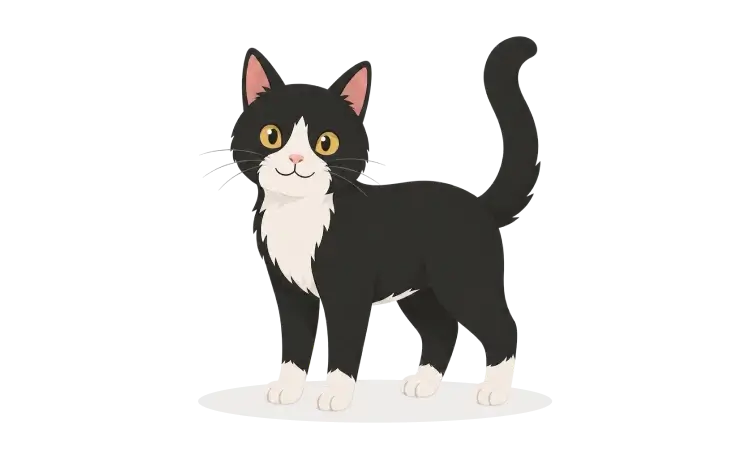
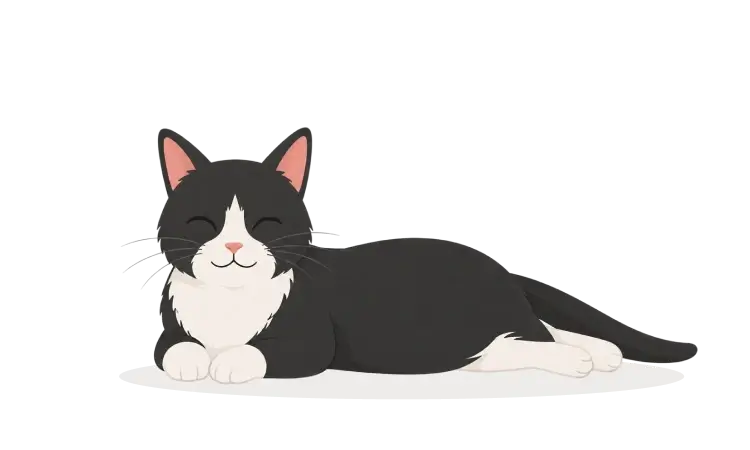
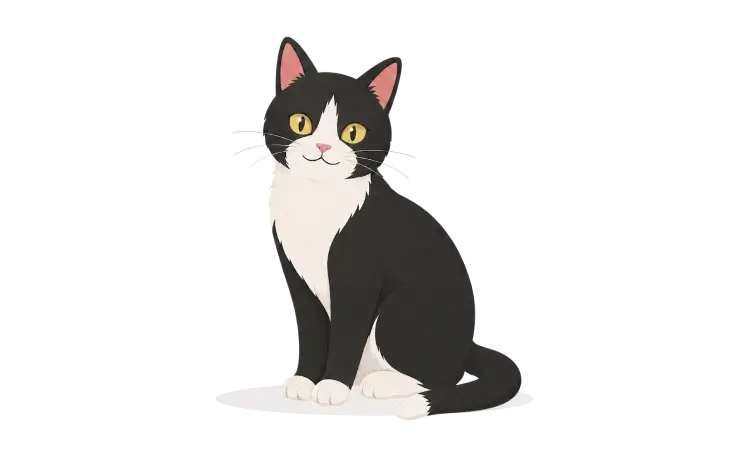
- A raised tail with a soft curve at the tip (usually a friendly greeting)
- Ears forward and relaxed
- Slow, soft blinks
- Purring
- Head-bumping or rubbing against you
- Grooming or kneading
- Nose touching
- Whiskers in a neutral, relaxed position
- Relaxed body posture
- Tail held loosely away from body when sitting or lying down
Signs of a stressed or anxious cat
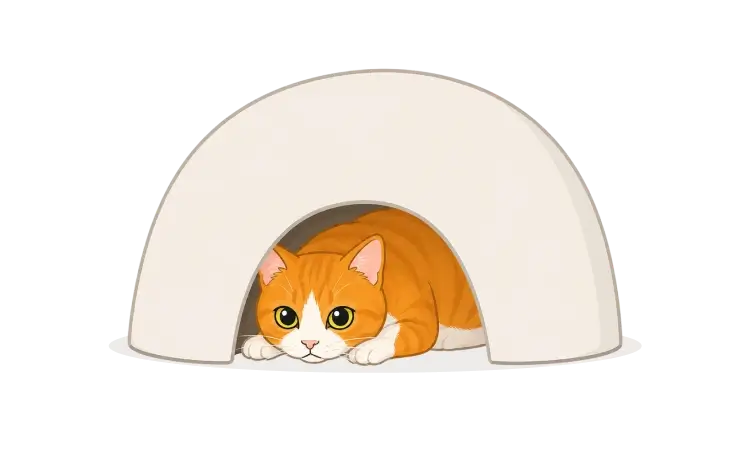
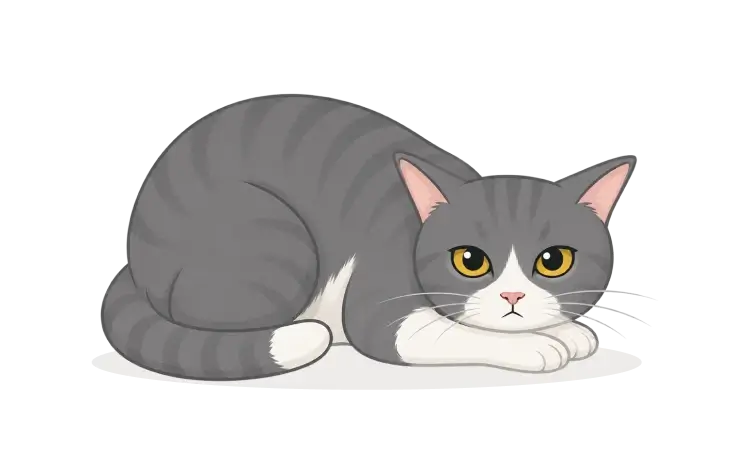
Cats who are feeling stressed or uncomfortable may show the following signs:
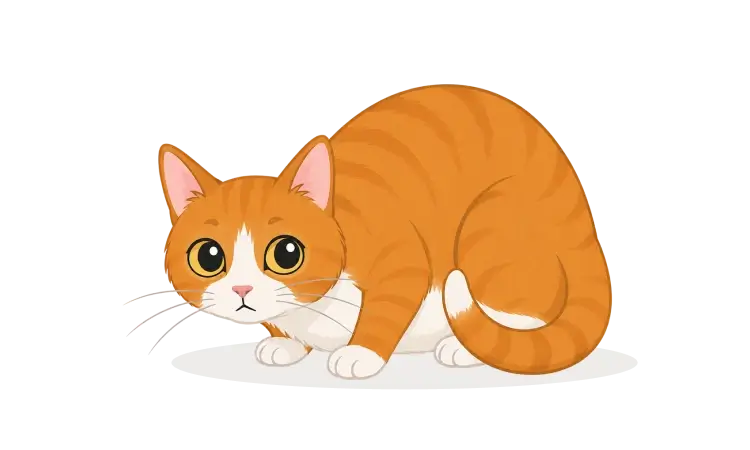
- Dilated pupils
- Ears swiveled sideways
- A tail held low or wrapped tightly around the body
- Crouching or a stiff, tense posture
- Rapid tail flicking
- Hiding
- Mild tension in the face
Signs of an angry or very unhappy cat
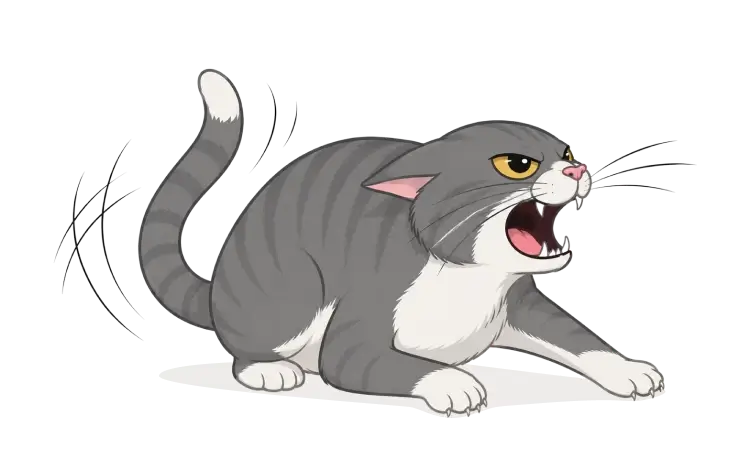
Cats who are very unhappy and want you to stay away or go away may show the following signs:
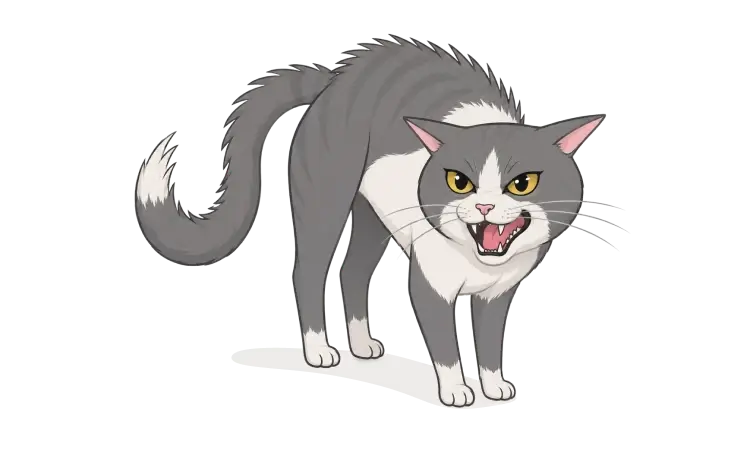
- Ears flattened or pinned back
- Body flattened, with limbs held tightly
- Mouth open and tense, with teeth showing
- Arched back
- Hair raised along the body
- Puffed-up tail
If your cat regularly shows signs of stress, it’s worth speaking with your vet to rule out any underlying health concerns. Your vet can also guide you on how to help your cat feel more relaxed in your home and to address any ongoing fear and anxiety once underlying health concerns have been ruled out.
Understanding cat tail language
A cat’s tail is one of the most expressive parts of their body.
Here’s a quick guide to what different tail positions and movements could mean:
- Raised tail, gently curved at the tip: a friendly greeting. They may be open to play or a pat.
- Raised straight tail: your cat is likely feeling happy and confident.
- Quivering tail (held upright): excitement, or spraying urine, which can be a sign that your cat is stressed.
- Slow, gentle wag: focus or mild interest, often seen during play or hunting behaviour.
- Rapid swishing or flicking: your cat may be feeling upset, annoyed, or overstimulated (a cue to give your cat some space).
- Tail wrapped tightly around the body: discomfort, fear, anxiety, or wanting to be left alone.
- Tail loosely around the body while resting: cats will often use their tail to keep themselves warm.
- Puffed-up or bushy tail: fright or feeling defensive.
- Puffy base of tail: overstimulation or high excitement.
- Unusual or jerky movements: this could be a sign that your cat is in pain or uncomfortable. If you notice any other behavioural changes, contact your vet to rule out any health issues.
Remember to interpret your cat’s tail movements and appearance with the rest of their body language to get a full picture of how they might be feeling.
Other cat behaviours and what they mean
Purring
Purring is one of the most recognisable cat behaviours, but it doesn’t always mean contentment. While cats often purr when they’re happy and relaxed, they may also purr as a form of self-soothing during stress, discomfort, or pain. Always read purring in context with your cat’s other body language signals, and if you notice any other changes to your cat’s normal behaviour, get in touch with your vet.
Eye contact and blinking
Direct, unblinking eye contact can feel threatening to a cat. If you want to signal that you’re relaxed and friendly, try a slow blink in their direction. Many cats will slowly blink back. It’s a gentle, non-verbal way of building trust.
Pupils can also tell you a lot. Almond-shaped pupils in normal light usually indicate a calm, relaxed cat. Narrow pupils can indicate that your cat is engaging in hunting behaviour, is focused, or mildly annoyed. Wide, dilated pupils may signal excitement, stress, or fear. Pay attention to how dim or bright it is as a cat’s pupils will dilate or narrow to adapt to light.
Some medical conditions can also cause a cat’s pupil to narrow or dilate. If you notice something unusual, like a noticeable difference between the size of your cat’s two pupils, a cloudiness in the eye, or any redness, discharge, or swelling, contact your vet as soon as possible.
Rubbing and scent marking
When your cat rubs their face or body against you, they’re marking you as part of their social group using scent glands around their face. It’s a sign of trust and affection. Cats may also scent-mark their territory by rubbing objects, scratching, and urine spraying. Urine spraying can be a sign that your cat is stressed, and can be triggered by environmental changes, including moving house, or introducing new pets to the family. If this happens, talk to your vet as there are many options to help cats in these situations.
Kneading
Kneading (that rhythmic pushing motion some cats do with their front paws) is generally a sign of comfort and relaxation. Cats often learn this behaviour as kittens while nursing, and many carry it into adulthood as a soothing habit.
Rolling over
A cat who rolls over and shows you their belly is demonstrating trust and that they feel content and safe. However, most cats don’t want their tummy touched when they roll over. It’s a social gesture, not an invitation. A gentle head scratch is usually a better response. Rolling around and vocalising can also be a sign of heat in a female cat who hasn’t been desexed.
Zoomies
Sudden bursts of energy, also known as zoomies, are common in cats and are usually nothing to worry about. They often happen after a long rest, when a cat is bored, or sometimes after using the litter tray. If the zoomies are happening a lot, consider whether your cat might benefit from some more enrichment in their environment to keep them entertained.
Vocalisations
Cats have a wide vocabulary, including meows, hisses, growls, and chirps. They may use vocalisations in a range of situations, such as when they’re hungry, as a greeting, feeling scared, or in pain.
How to strengthen your bond with your cat
Building trust with a cat takes time and patience. A few things that can help include:
- Never forcing interaction: let your cat come to you
- Responding to their signals and giving them space when they need it
- Providing an environment that meets their physical and mental needs, including opportunities for your cat to climb, hide, play, and explore safely
- Using slow blinking to communicate calmness
- Considering a synthetic pheromone diffuser if your cat seems anxious, particularly after a move or change in routine
If you have any concerns about your cat’s behaviour, your vet is always a good first point of contact.
How pet insurance can help support your cat’s wellbeing
Understanding your cat is one thing, but when unexpected vet visits arise, having the right cover in place can help you focus on getting them the care they need rather than worrying about the bill. If you’re welcoming a kitten into your family, considering kitten insurance early can also help you prepare for unexpected vet care as they grow.
And if you choose RSPCA Pet Insurance, your policy doesn’t just help protect your pet, every policy helps support the RSPCA’s important animal welfare work across Australia.
To learn more about how RSPCA Pet Insurance could support you and your pet, click here. Or, if you’re ready to take the next step, you can fetch a commitment-free pet insurance quote online.
Disclaimer
As with any insurance, terms, conditions and exclusions apply. Please read the Product Disclosure Statement to make sure this cover suits your needs.
FAQs
Cat tail movements can mean many different things depending on the context. A slow, gentle wag can signal focus or playfulness, while a fast-swishing tail can indicate annoyance, anticipation, or overstimulation. A raised, softly curved tail can be a sign of a friendly greeting.
It’s important to read your cat’s tail signals with the rest of their body language and facial expressions — their eyes, ears, mouth, whiskers, posture, and what’s happening in the environment, can all give you a better picture of what they might be feeling.
A rapidly flicking or swishing tail can be a sign that a cat is irritated or wants to be left alone. It can also show intense focus or anticipation. If you’re patting your cat and notice their tail begins to swish and flick, it’s a good cue to give them some space. Practice letting your cat tell you when they would like a pat, by offering your hand, and waiting to see if they rub their head against you. Take breaks between pats to see if your cat wants to continue the interaction. This will help avoid getting your cat to the stage of needing to use their tail to communicate with you.
A bushy or puffed-up tail usually means a cat is startled, frightened, or feeling defensive. In some cases, a cat’s tail may be puffed-up when they feel playful or excited — so it’s important to pay attention to the context and the rest of your cat’s body language. If your cat is scared or defensive and has a puffed-up tail, it’s a sign that they need space and time to feel safe again.
Yes, depending on your policy, pet insurance can help cover the cost of vet treatment if your cat becomes ill or is injured. If you’re looking for cover that also makes a difference for animals in need, RSPCA Pet Insurance may be a good fit. With every policy helping to support the RSPCA’s animal welfare work, it’s protection with purpose. As with any insurance, terms, conditions and exclusions apply. Please read the Product Disclosure Statement to make sure this cover suits your needs.