Facts & fun

This article provides general information only and is not a substitute for personalised veterinary advice. Always speak with your vet about your pet’s individual health needs. Accurate as at 16 October 2026.
There’s something lovely about giving your cat a special treat and knowing exactly what’s gone into it. Homemade cat treats can be a fun way to give them something extra to enjoy, as long as you keep things simple, safe, and suited to their individual needs.
Because cats have specific nutritional needs, not everything in our kitchen belongs in their bowl. So, before you start cooking up a storm, let’s explore which ingredients are safe, what to steer clear of, and how to keep treats to a sensible amount.
Table of contents
- Understanding your cat’s dietary needs
- The golden rule: a little goes a long way
- Simple, safe homemade cat treat ideas
- Making treat time more fun
- Foods to avoid
- A few safety tips
- When to have a chat with your vet
- How pet insurance can support your cat’s health
Understanding your cat’s dietary needs
Good nutrition is essential to your cat’s health. Cats are ‘obligate carnivores’, which means they need nutrients found in animal-based foods to stay healthy. These include certain essential amino acids that must be provided through a complete and balanced diet.
So, while your cat might show an interest in what’s on your plate, their nutritional needs are quite different from ours (and even those of dogs), and many human foods aren’t safe for them. When it comes to homemade treats, keeping things safe and simple is generally a good place to start. Just remember, treats should complement your cat’s regular, balanced diet, not replace it.
The golden rule: a little goes a long way
We all love spoiling our cats. But when it comes to treats, moderation is key.
Your cat’s main meals should provide them with complete and balanced nutrition suited to their age, health, and individual needs. Homemade treats are best kept as occasional extras, rather than becoming a regular part of their meals.
Too many treats can upset the balance of your cat’s diet and contribute to unwanted weight gain. So, as tempting as it might be to give in to those pleading eyes, a little really does go a long way.
It’s also important to remember that homemade treats aren’t a substitute for dental care. Speak to your vet about regular brushing, and whether a dental diet, chews or dental treats may help support your cat’s oral health.
Simple, safe homemade cat treat ideas
You don’t need to be a whizz in the kitchen to whip up something special for your cat. In fact, some of the simplest options make great occasional treats.
Here are a few ideas to try:
- Plain cooked chicken: a little boiled or steamed chicken can make a tasty treat. Just make sure it’s thoroughly cooked, boneless, and free from oil, salt, and seasonings.
- A little tinned fish: small amounts of fish such as sardines, tuna, or salmon in spring water can be offered occasionally. Check carefully for bones and avoid fish packed in brine or oil.
- Frozen treats: on warm days, try freezing small portions of cat-safe food such as plain cooked chicken or fish. You can also freeze small amounts of your cat’s usual wet food for a cool treat.
Top tip: you can take any of these treats a step further by adding a small amount of catnip. Some cats enjoy the scent and flavour, which can make treat time even more engaging.
And if you’d like to get a little more creative, you could also try making some baked goods.
Homemade chicken cat biscuits
Ingredients
- 150g cooked chicken breast, finely shredded or blended
- 1 egg, beaten
- 250g plain flour (or a suitable gluten-free alternative)
- A little water, if needed
Method
- Preheat the oven to 180°C (160°C fan-forced) and line a baking tray with baking paper.
- Blend or finely shred the cooked chicken until it reaches a smooth consistency.
- Combine the chicken and egg in a mixing bowl.
- Add the flour and mix until a dough forms. If the mixture is too dry, add a small amount of water.
- Roll the dough out on a lightly floured surface to approximately 5mm thick.
- Cut into small bite-sized shapes suitable for cats. You may wish to use appropriately sized cookie cutters for this part.
- Place on the prepared baking tray and bake for around 20 minutes, or until firm and lightly crisp.
- Allow the biscuits to cool completely before serving.
- Store in an airtight container in the fridge and use up within a week. Discard immediately if there are any signs of spoilage.
Homemade chicken or beef jerky
Ingredients
150g fresh, lean chicken breast with all visible fat removed, or 150g lean beef mince
Method
- Prepare the meat:
- For chicken, slice the chicken breast as thinly as possible (around 3mm thick).
- For beef, roll the mince out between sheets of baking paper until it’s approximately 3mm thick.
- Score a chequered pattern on the meat with a table knife so you can break it into bite-sized pieces later.
- Place the meat on an oven rack lined with baking paper or in a food dehydrator.
- Dry at a low temperature (around 60-70°C) for 4 to 6 hours, or until the treats are completely dry and crisp.
- Allow to cool completely before serving.
- Store in an airtight container in the fridge and use up within a week. Discard immediately if there are any signs of spoilage.
The secret? Keep it simple: plain ingredients, small portions, and no added oils, salt, or seasonings.
Remember that all treats should only be offered occasionally as part of a complete and balanced diet. Treats can add up quickly and contribute to weight gain if fed in excess. If your cat has any special dietary requirements, allergies, food intolerances, or health conditions, speak to your vet before offering homemade treats. They can help you determine whether any of the ideas above are suitable and suggest any adjustments that may be needed.
Making treat time more fun
Treat time isn’t just about what’s in your cat’s bowl. It’s also a chance to keep them curious, active, and entertained.
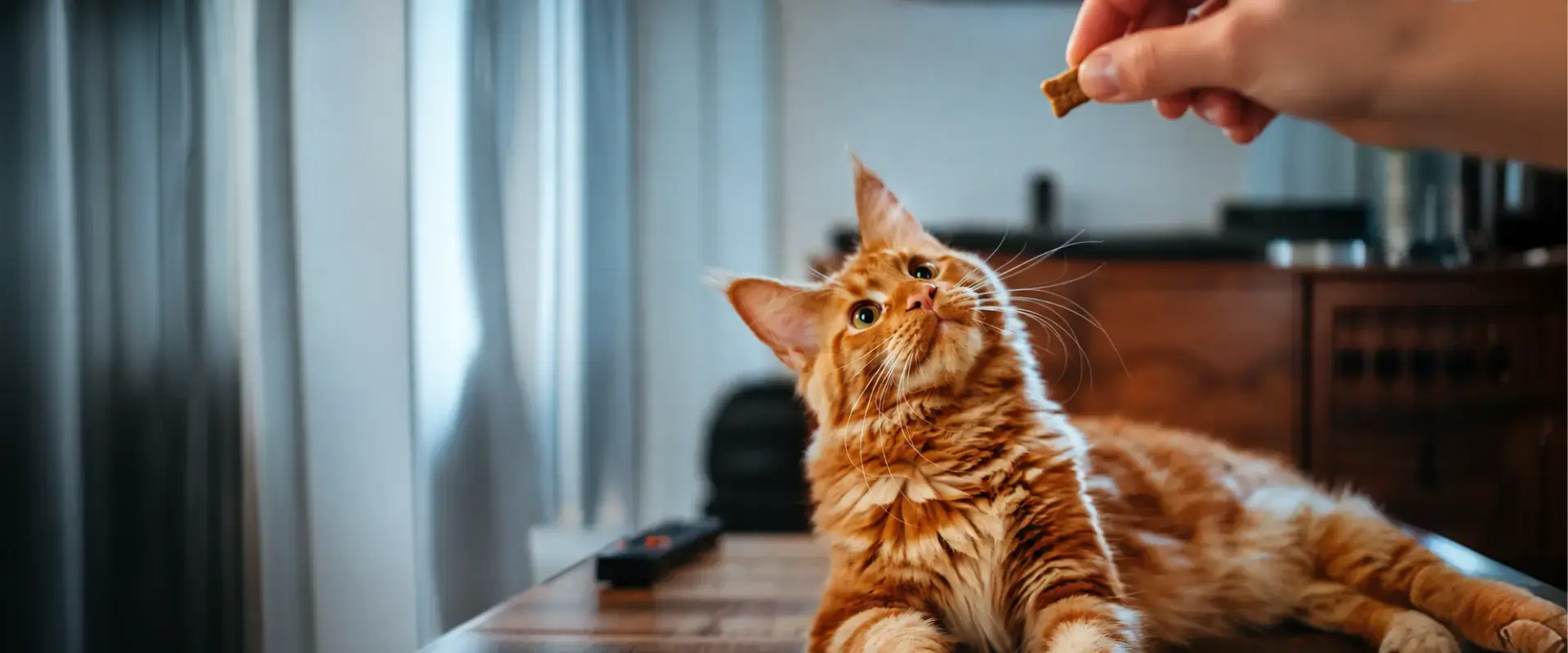
Instead of simply handing over a treat, try placing small amounts in a treat-dispensing toy or puzzle feeder, or hiding treats in safe spots around the house for your cat to discover. These activities encourage your cat’s natural behaviours, such as exploring, while engaging their senses and providing valuable mental and physical stimulation. Plus, watching your cat discover hidden treats can be rewarding for both of you.
Foods to avoid
Not everything we enjoy eating is safe for our feline friends. In fact, some everyday foods can make cats seriously unwell.
Here’s a list of foods and ingredients to avoid when preparing treats for your cat:
- Onion, onion powder, garlic, and other members of the onion family
- Chocolate, coffee, and anything containing caffeine
- Grapes, raisins, sultanas, and currants
- Nuts, including macadamias
- Avocado, fruit stones, and seeds
- Raw bread dough containing yeast, and mouldy or spoiled food
- Bones and raw meat
- Salty foods, seasonings, fatty trimmings, sausages, and processed meats
This isn’t a complete list, so if you’re unsure whether something is safe for your cat, it’s always best to check with your vet before offering it. And if you suspect your cat has eaten something toxic, contact your vet straight away. Don’t wait for symptoms to appear.
A few safety tips
Before you pop on your apron, here are a few simple things to keep in mind when making treats for your cat:
- Keep it plain. Salt, many seasonings, sauces, and some flavourings can be harmful or unsuitable for cats. Avoid adding these ingredients to homemade treats.
- Watch out for bones. Always remove bones from chicken and fish before serving. Never give your cat cooked bones, as they can splinter and cause serious harm.
- Start small. Introduce new foods gradually and keep an eye out for any unusual reactions, especially if your cat has a sensitive stomach.
- Mind the portions. Treats should only make up a small part of your cat’s daily food intake. Remember that treats can add up quickly, so it’s important to offer them in moderation.
- Keep things fresh. Store homemade treats safely in a sealed container in the fridge and out of your cat’s reach. Throw away anything that’s been left out too long or shows signs of spoiling.
- Check the temperature. Always allow any homemade treats to cool down completely before offering them to your cat, especially if they’ve been baked or cooked.
When to have a chat with your vet
Just like us, every cat is different. What works for one might not be right for another. If your cat has allergies, food intolerances, a sensitive stomach, health conditions, or special dietary requirements, it’s worth chatting with your vet before offering any homemade treats.
Your vet can help you understand which ingredients are suitable, how much is appropriate, and how to fit the occasional treat into your cat’s overall diet.
How pet insurance can support your cat’s health
From choosing the right food to creating a safe, comfortable, and stimulating home environment, looking after your cat’s health and wellbeing is all part of being a pet parent.
But even with the best care, unexpected things can happen. Whether it’s an upset tummy or your cat getting injured, a surprise vet visit can be stressful. That’s where pet insurance may be able to help, covering a portion of eligible vet expenses when your cat becomes ill or injured, and giving you one less thing to worry about when they need care.
And if you choose RSPCA Pet Insurance, you can also customise your cat’s cover to suit their needs and your budget, with annual cover limits up to $35,000, benefit percentage options up to 90%, and a zero excess option. Plus, every policy contributes directly to RSPCA animal welfare initiatives, including rescue, rehab, and rehoming efforts. So, while you’re helping to protect your own cat, you’re also making a difference for animals in need across Australia.
To learn more about how RSPCA Pet Insurance could support you and your cat, click here. Or, if you’re ready to take the next step, you can fetch a commitment-free pet insurance quote online.
Disclaimer
As with any insurance, terms, conditions, and exclusions apply. Please read the Product Disclosure Statement to make sure this cover suits your needs.
References
[1] RSPCA Australia. What should I feed my cat? RSPCA Knowledgebase. Available from: https://kb.rspca.org.au/categories/companion-animals/cats/caring-for-my-cat/what-should-i-feed-my-cat
[2] RSPCA Australia. Do cats have special nutritional requirements? RSPCA Knowledgebase. Available from: https://kb.rspca.org.au/categories/companion-animals/cats/caring-for-my-cat/do-cats-have-special-nutritional-requirements
[3] RSPCA Australia. My cat is very active at night and keeps waking me up, what should I do? RSPCA Knowledgebase. Available from: https://kb.rspca.org.au/categories/companion-animals/cats/behaviour/my-cat-is-very-active-at-night-and-keeps-waking-me-up-what-should-i-do
[4] World Small Animal Veterinary Association. Feeding treats to your cat. Available from: https://wsava.org/wp-content/uploads/2024/06/Feeding-treats-to-your-cat-v2.pdf
[5] RSPCA Australia. What are common household dangers for pets? RSPCA Knowledgebase. Available from: https://kb.rspca.org.au/categories/companion-animals/household-and-garden-dangers/what-are-common-household-dangers-for-pets
[6] Agriculture Victoria. Common cat poisons. Available from: https://agriculture.vic.gov.au/livestock-and-animals/animal-welfare-victoria/cats/health/common-cat-poisons
[7] International Cat Care. How to change your cat’s food to a new diet. Available from: https://icatcare.org/articles/how-to-change-your-cats-food-to-a-new-diet
[8] U.S. Food and Drug Administration. Proper storage of pet food and treats. Available from: https://www.fda.gov/animal-veterinary/animal-health-literacy/proper-storage-pet-food-treats
[9] RSPCA Australia. How can I create low-cost DIY enrichment for my cat or dog? RSPCA Knowledgebase. Available from: https://kb.rspca.org.au/categories/companion-animals/dogs/caring-for-my-dog/how-can-i-create-low-cost-diy-enrichment-for-my-cat-or-dog
[10] Battersea. 3 simple cat treats. Available from: https://www.battersea.org.uk/pet-advice/cat-advice/3-simple-cat-treats
[11] RSPCA UK. Cat treats recipe. Available from: https://www.rspca.org.uk/getinvolved/fundraise/ideas/bakesales/cattreats
FAQs
When it comes to homemade cat treats, simple is often best. Small amounts of plain, cooked chicken (with no bones or seasoning) can make a suitable occasional treat for many cats. You can also offer a little tinned tuna, salmon, or sardines in spring water, as long as they’re free from bones, seasonings, and other additives. Just remember, every cat is different, so it’s always worth checking with your vet before introducing new foods to your cat.
Only occasionally. Your cat should be fed a complete and balanced diet appropriate for their life stage and health, and any other foods, including treats, should only be offered in small amounts as part of their daily food intake, not as a replacement for their regular meals. Feeding too many treats can contribute to weight gain and obesity. Think of treats as a small extra, rather than an everyday essential.
Not everything we enjoy eating is safe for our whiskered companions. Ingredients like onion, garlic, chocolate, grapes, and raisins can be toxic to cats, while cooked bones can splinter and cause serious injuries. When making homemade cat treats, stick to simple, cat-safe ingredients and leave out anything you’re unsure about. A quick check with your vet can also help ensure that you’re offering treats that are suitable for your cat.
Yes. Even small amounts of treats can add up over time. Homemade cat treats should only make up a small part of your cat’s daily food intake, alongside a complete and balanced diet appropriate for their life stage and health. Feeding too many treats can contribute to weight gain and obesity. If you’re unsure how much and what type of treats are suitable for your cat, seek advice from your vet.