Facts & fun

This article provides general information only and is not a substitute for personalised veterinary advice. Always speak with your vet about your pet’s individual health needs. Accurate as at 15 October 2026.
You’re settling in for a quiet evening when your cat hops onto your lap, gets comfy, and puts their paws to work. Push, push, push. That rhythmic little motion is known as kneading or, more informally, ‘making biscuits’.
It’s one of those wonderfully cat-like behaviours that can be equal parts adorable and, when their claws come out, a little prickly. But why do cats knead in the first place? From kittenhood instincts to feeling safe and content, experts have several theories that may help explain those busy paws.
Table of contents
- What is kneading, exactly?
- When it starts
- Why adult cats still knead
- How kneading may help cats communicate through scent
- Does kneading mean a cat is happy?
- Could it be linked to social bonding?
- Should you be worried about your cat kneading?
- How pet insurance can help with unexpected vet bills
What is kneading, exactly?
Kneading is a rhythmic massaging action where a cat pushes their front paws into a soft surface, alternating one paw and then the other. It’s named for its resemblance to kneading dough, hence the popular nickname ‘making biscuits’. Cats often do it on blankets, cushions, or their favourite person’s lap, sometimes with a contented purr.
When it starts
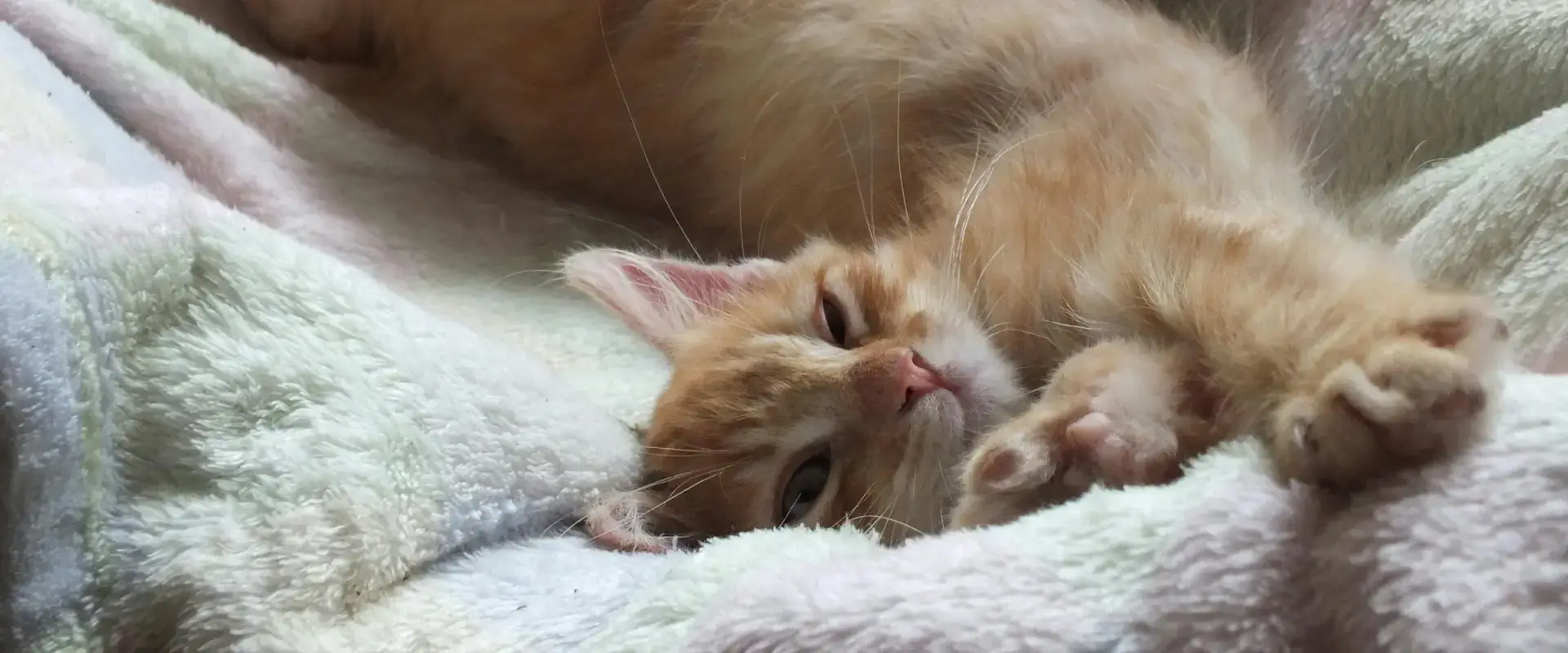
Kneading begins in kittenhood. Kittens knead against their mother while feeding, and this action helps stimulate her milk supply. When you see your adult cat kneading, part of what you’re seeing is a behaviour that first developed during their earliest days of life.
Why adult cats still knead
Why do cats keep kneading long after kittenhood? One possible explanation is something called neoteny: when an animal holds on to certain youthful traits and behaviours as they grow up. Kneading may be one example of this, as it may simply be one of several kitten behaviours that persist into adulthood.
Because kneading is associated with nursing and the close contact between kittens and their mother, it may continue to play a role in comfort-seeking and self-soothing later in life. This could help explain why many cats knead when they’re feeling relaxed and content.
How kneading may help cats communicate through scent
Kneading may also be a form of scent communication. Cats have scent glands around their paw pads, so as they press down, they can leave behind their unique scent. This is similar to the scent-marking associated with scratching and rubbing, which helps cats communicate with other cats and navigate their environment. That means when your cat kneads their favourite blanket, bed, or even your lap, they may be leaving scent cues behind. These signals are subtle and undetectable to us, but they can play an important role in how cats interact with people, other animals, and the world around them.
Does kneading mean a cat is happy?
Kneading is often seen when your cat is feeling relaxed and content. You might notice their paws getting to work when they’re curled up somewhere cosy, enjoying a pat, or getting ready to sleep.
There may be an instinctive reason for it, too. Some researchers suggest kneading may be linked to preparing a comfortable resting place, a habit that could reflect behaviours inherited from cats’ wild ancestors. So, when your cat kneads their favourite blanket before settling in, they could be following an instinct that goes back generations.
Could it be linked to social bonding?
Kneading often occurs when cats are resting near people they know and trust. Because the behaviour is associated with nursing and close physical contact during kittenhood, some researchers suggest it may continue to be linked with feelings of familiarity, security, and social connection in adulthood.
So, while we can’t know exactly what a cat is experiencing when they knead, the behaviour is commonly seen in situations where cats appear comfortable and at ease. The attention and affection cats often receive when they knead may also help reinforce the behaviour over time.
Should you be worried about your cat kneading?
For most cats, kneading is a normal behaviour and there’s usually no need to discourage it. If your cat’s claws make cuddle time less comfortable, try popping a thick blanket between your lap and their paws. And if those claws are getting a bit long, our guide to trimming your cat’s nails safely has some handy tips.
Sometimes, though, a change in kneading behaviour is worth paying attention to. If your cat suddenly starts kneading much more than usual, seems unable to stop, or suckles on fabric at the same time, it may indicate an underlying behavioural or health issue.
If kneading seems to be causing injury to your cat’s paws, legs, or mouth, or you’re concerned about their kneading behaviour, speak to your vet for advice.
How pet insurance can help with unexpected vet bills
Cats may be full of little quirks, but sometimes a change in behaviour can be a sign that something is amiss. When illness or injury leads to an unexpected trip to the vet, pet insurance may be able to take some of the worry out of the cost by covering a portion of your eligible vet bills.
If you’ve been considering covering your whiskered friend, RSPCA Pet Insurance has something unique to offer: cover you can customise to suit your cat’s needs and your budget, and direct support for the RSPCA’s animal welfare work. So, while you’re helping to protect your own cat, you’re also making a difference for animals in need across Australia.
To learn more about RSPCA cat insurance, click here. Or, if you’re ready to take the next step, you can fetch a commitment-free pet insurance quote online.
Disclaimer
As with any insurance, terms, conditions, and exclusions apply. Please read the Product Disclosure Statement to make sure this cover suits your needs.
References
[1] RSPCA Australia. Why does my cat scratch the furniture? RSPCA Knowledgebase. Available from: https://kb.rspca.org.au/categories/companion-animals/cats/behaviour/why-does-my-cat-scratch-the-furniture
[2] The Conversation. Why do cats knead? Available from: https://theconversation.com/why-do-cats-knead-192743
[3] RSPCA Australia. What does my cat’s body language mean? RSPCA Knowledgebase. Available from: https://kb.rspca.org.au/categories/companion-animals/cats/behaviour/what-does-my-cats-body-language-mean
[4] VCA Animal Hospitals. Why do cats knead? Available from: https://vcahospitals.com/resources/behavior-cat/true-or-false-do-cats-knead
FAQs
There isn’t one single answer, but the leading theories trace it back to kittenhood, when kittens knead to help stimulate their mother’s milk. Many cats keep the behaviour into adulthood, where it may be associated with comfort and contentment, scent-marking through glands in their paws, and bonding with the people and places they feel safe with.
Often, yes. Cats frequently knead when they’re relaxed, such as when they’re curling up on your lap or settling into a cosy spot, and it’s commonly seen as a sign of comfort and contentment. Every cat is an individual, though, so it’s best to look at the bigger picture, including the situation they’re in, their posture, ears, tail, and other behaviours, to get a better sense of how they’re feeling.
Kneading is a normal, natural behaviour, so there’s usually no need to stop it. If your cat’s claws are a bit too prickly, pop a thick blanket down as a buffer. Keeping their claws neatly trimmed can help too (our guide to trimming your cat’s nails has tips to make the process easier for you both).
That said, if your cat suddenly starts kneading much more than usual, seems unable to stop, suckles on fabric while kneading, or seems to be injuring their paws, legs, or mouth, it’s worth discussing it with your vet.
Pet insurance can help you manage eligible vet costs if your cat becomes ill or injured unexpectedly, so you can focus on getting them the care they need.
With RSPCA Pet Insurance, you can also adjust your cat’s cover so it suits their needs (and your budget). There are annual cover limits up to $35,000, benefit percentage options up to 90%, and a zero excess option, and every policy contributes to the RSPCA’s animal welfare initiatives. It’s protection with purpose, for your own cat and thousands of animals in need across Australia.
To learn more, visit the RSPCA Pet Insurance website or get a commitment-free quote online today.
As with any insurance, terms, conditions, and exclusions apply. Please read the Product Disclosure Statement to make sure this cover suits your needs.