Care & training

This article provides general information only and is not a substitute for personalised veterinary advice. Always speak with your vet about your pet’s individual health needs. Accurate as at 9 October 2026.
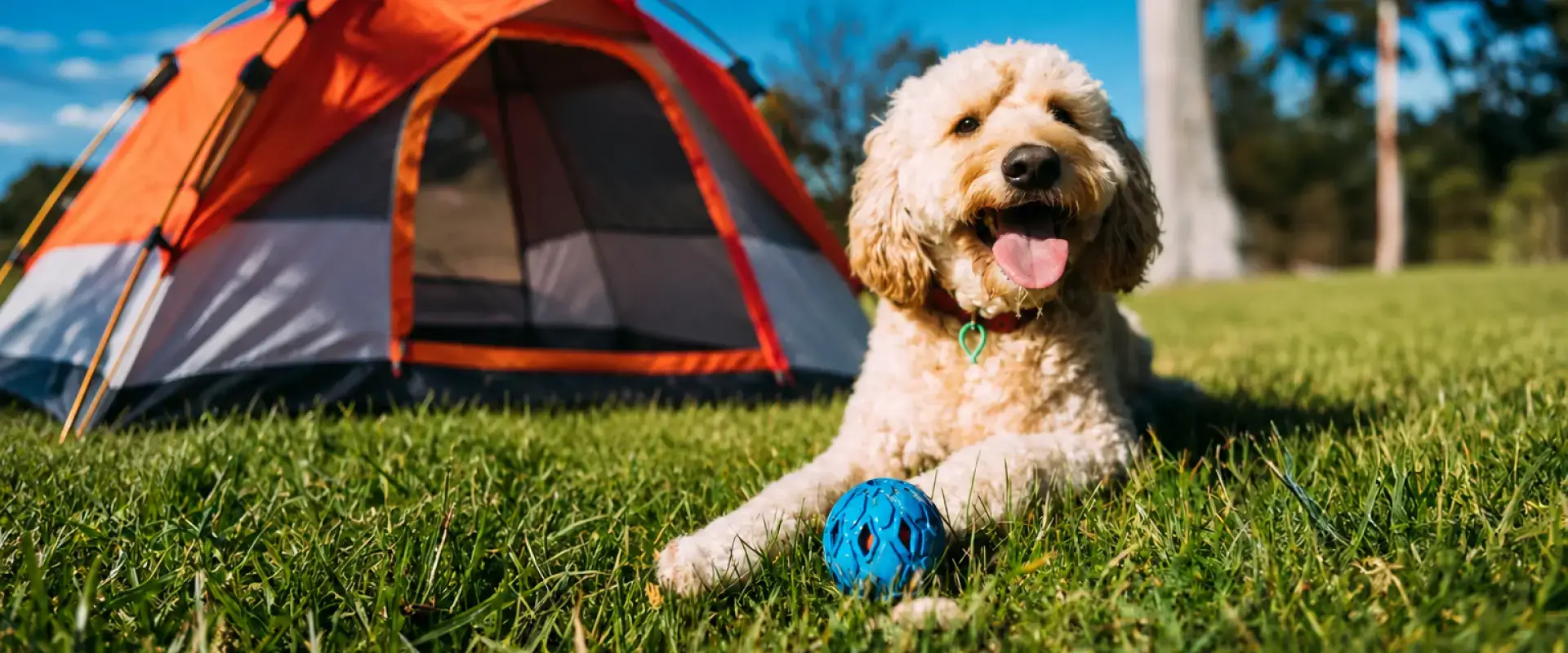
Camping can be a great way to spend time outdoors with your dog. New places, smells, and experiences can make it an exciting outing for many dogs.
From choosing the right spot to packing the essentials, here are our tips for a dog-friendly camping trip that can help you and your dog enjoy the experience safely and comfortably.
Table of contents
- Check whether the campsite welcomes dogs
- Prepare your dog for the trip
- Travel safely
- Keep your dog close while camping
- Be mindful of hot weather
- Make sure your dog can be identified
- Pack with your best mate in mind
- Double-check your pet insurance policy before you go
Check whether the campsite welcomes dogs
Before you start packing, make sure your campsite is dog-friendly. Many national parks don’t allow dogs, while campgrounds, caravan parks, and nature reserves have their own rules. Check the pet policy before you book so there are no unwelcome surprises when you arrive.
It’s also worth checking the finer details, like requirements to keep dogs on a leash, areas that are off-limits to dogs, any restrictions to protect local wildlife, and whether there’s shade and fresh water nearby. A little homework before you go means more time enjoying the outdoors together once you’re there.
Prepare your dog for the trip
A happy camping trip starts before you hit the road. Here are a few things worth sorting out before you set off:
- Check in with your vet. Make sure your dog is healthy enough to travel and ask whether their vaccinations, worming, and parasite prevention are up to date.
- Talk about where you’re headed. Different destinations can bring different health risks, so ask your vet whether your dog needs any additional preventative care, such as paralysis tick or heartworm prevention. If your dog takes prescription medication, make sure you have enough for the whole trip and bring a copy of their prescription with you.
- Help your dog get used to the car. If car travel is new or a little nerve-racking for your dog, start with shorter trips and build up gradually. Treats, praise, and other positive reinforcement can help make getting in the car a more comfortable experience. Make sure you have an appropriate car restraint that your dog is comfortable with, and carefully plan the journey in advance, allowing for regular breaks.
Travel safely
Keeping your dog safe on the road is just as important as keeping them safe at the campsite. Use a properly secured, crash-tested harness in the back seat or a well-ventilated, crash-tested crate. This helps prevent distractions while you’re driving and can reduce the risk of injury if you need to stop suddenly.
For longer drives, plan regular stops for toilet breaks, water, and a little on-leash exercise somewhere safe. It’s also worth checking the road rules before you leave, as requirements for travelling with dogs can vary between states and territories.
Keep your dog close while camping
A campsite is full of interesting new sights, sounds, and smells, not to mention other campers and local wildlife. Keeping your dog on a leash in these new surroundings can help stop them from wandering off or bothering other campers.
If you’re considering some off-leash exploring, first check that it’s permitted and safe. Only let your dog off-leash if you’re confident they’ll come back to you when called, even with unfamiliar sights, sounds, and smells around them. Keeping your dog close and under control helps make camping safer and more enjoyable for everyone.
Be mindful of hot weather
Australian weather can heat up very quickly, putting dogs at risk. Heatstroke is a life-threatening emergency, with the risk increasing in hot or humid weather, during strenuous exercise, or when there isn’t enough shade or water. Some dogs are more vulnerable, including flat-faced breeds, dogs who are overweight, puppies, and older dogs.
To reduce the risk, make sure your dog always has access to fresh water and a shady place to rest, and keep more energetic activities to the cooler parts of the day. Never leave your dog alone in a parked car, even for a short time or with the windows down. If your dog is showing signs of heat stress, such as heavy panting, excessive drooling, weakness, or collapse, move them somewhere cool and seek vet attention immediately.
Make sure your dog can be identified
Even with the best precautions, dogs can become separated from you in unfamiliar surroundings. Before you go, make sure your dog is microchipped and that your contact details are up to date on the relevant registry. An ID tag with your mobile number on their collar is another simple way to help someone reach you quickly if your dog gets lost.
If you’re travelling interstate, check that your dog’s microchip details can be accessed if they’re found away from home. It’s also a good idea to save the details of a vet near your campsite, including the nearest after-hours clinic, so you know who to call if you need help.
Pack with your best mate in mind
A little thoughtful packing can help your dog feel at home, even when home is a tent. Along with your own camping gear, be sure to make room for:
- Your dog’s usual food and favourite treats, with enough for the whole trip
- Food and water bowls, plus plenty of fresh water for the journey and campsite
- Comfortable bedding
- Travel crate or other appropriate car restraint
- Their collar or harness with an ID tag, and a leash
- A favourite toy or two, plus a towel for wet or muddy paws
- Poo bags
- Any medications they need (plus their prescriptions) and a basic pet first aid kit
- Something to provide shade, such as a tarp, if there won’t be enough at your campsite
For more tips on getting ready to hit the road with your dog, take a look at our pet travel guide.
Double-check your pet insurance policy before you go
Even with careful planning, your dog may unexpectedly need vet care while you’re away from home. And when that happens, having pet insurance in place may provide some much-needed financial relief.
If you already have a pet insurance policy, remember to check the details of your cover so you know what to expect if you need to claim. And if you don’t? Depending on your individual circumstances and needs, it may be worth looking into the cover options that are available.
For example, with RSPCA Pet Insurance you can customise your cover to suit your dog’s needs and your budget, with annual cover limits up to $35,000, benefit percentage options up to 90%, a zero excess option, and a wide range of optional extras.
Every policy also contributes to the RSPCA’s animal welfare work, including rescue, rehab, and rehoming efforts. It’s protection with purpose. For your own pet and thousands of others across Australia.
To learn more about how RSPCA Pet Insurance could support you and your dog, click here. Or, if you’re ready to take the next step, you can fetch a commitment-free pet insurance quote online.
Disclaimer
As with any insurance, terms, conditions, and exclusions apply. Please read the Product Disclosure Statement to make sure this cover suits your needs.
References
[1] RSPCA Australia. What do I need to know about taking my dog on a road trip with my family? RSPCA Knowledgebase. Available from: https://kb.rspca.org.au/categories/companion-animals/pets-and-holidays/what-do-i-need-to-know-about-taking-my-dog-on-a-road-trip-with-my-family
[2] RSPCA Australia. Do I need to restrain my dog when travelling in my car? RSPCA Knowledgebase. Available from: https://kb.rspca.org.au/categories/companion-animals/dogs/caring-for-my-dog/do-i-need-to-restrain-my-dog-when-travelling-in-my-car
[3] RSPCA Australia. How can I protect my dog from heatstroke? RSPCA Knowledgebase. Available from: https://kb.rspca.org.au/categories/companion-animals/dogs/caring-for-my-dog/how-can-i-protect-my-dog-from-heatstroke
[4] RSPCA Australia. Can you give me some advice on caring for my dog? RSPCA Knowledgebase. Available from: https://kb.rspca.org.au/categories/companion-animals/dogs/caring-for-my-dog/can-you-give-me-some-advice-on-caring-for-my-dog
[5] RSPCA Australia. Why is it important to ensure my pet is microchipped? RSPCA Knowledgebase. Available from: https://kb.rspca.org.au/categories/companion-animals/pet-ownership/why-is-it-important-to-ensure-my-pet-is-microchipped
[6] RSPCA Australia. How can I teach my dog recall (to come when called)? RSPCA Knowledgebase. Available from: https://kb.rspca.org.au/categories/companion-animals/dogs/training/how-can-i-teach-my-dog-recall-to-come-when-called
[7] RSPCA Australia. How can I protect my dog or cat from tick paralysis? RSPCA Knowledgebase. Available from: https://kb.rspca.org.au/categories/companion-animals/dogs/caring-for-my-dog/how-can-i-protect-my-dog-or-cat-from-tick-paralysis
[8] NSW National Parks and Wildlife Service. Pets and animals in national parks. Available from: https://www.nationalparks.nsw.gov.au/conservation-and-heritage/pets-in-national-parks
[9] RSPCA Queensland. A preventable, deadly disease to your dog or cat. Available from: https://www.rspcaqld.org.au/blog/pet-care/heartworm-and-prevention
[10] RSPCA Queensland. Camping with your pets. Available from: https://www.rspcaqld.org.au/blog/trending-now/camping-with-pets
[11] MedVet. Hiking and camping with your pet: 10 vet-approved tips for a safe adventure. Available from: https://www.medvet.com/hiking-camping-with-pets-safety-tips/
FAQs
Before heading off, book a visit with your vet to make sure your dog’s healthy and ready for the adventure. Check that their vaccinations, worming, and parasite prevention are up to date, and ask your vet whether your dog needs any additional protection for the area you’re visiting, such as paralysis tick or heartworm prevention. Make sure you have an appropriate car restraint and that your dog is comfortable with car travel. It’s also worth considering how they respond to new environments, unfamiliar people, and other animals.
No, so it’s always worth checking before you pack the car. Dogs aren’t permitted in many national parks, while campgrounds, caravan parks, and nature reserves can all set their own rules. Check your destination’s pet policy before you book, including where dogs are allowed, whether they need to be on a leash, and any rules designed to protect local wildlife. A quick check now can save you a lot of disappointment later.
The great outdoors comes with plenty of exciting sights, smells, and distractions, so keeping your dog secure is key. Restrain them safely in the car and keep them on a leash around the campsite, wildlife, and anywhere unfamiliar so they remain under control, unless you’re in a designated off-leash area.
Make sure they always have fresh water, shade, and an appropriate place to rest, watch for signs they’re getting too hot, and never leave them alone in a car. It’s also a good idea to check that their microchip details are current before setting off, and that they’re wearing an ID tag with up-to-date contact details at all times.
Pet insurance may cover eligible vet costs if your dog is injured while camping, depending on what happened and the cover you have.
If you’re thinking of switching cover or you’re looking into pet insurance for the very first time, RSPCA Pet Insurance offers cover for eligible injuries, with cover you can customise to suit your dog’s needs and your budget.
Every policy also contributes to the RSPCA’s animal welfare work. So, while you’re helping to protect your pup, you’re also making a difference for animals in need across Australia.
To learn more, visit the RSPCA Pet Insurance website or get a commitment-free quote online today.
As with any insurance, terms, conditions, and exclusions apply. Please read the Product Disclosure Statement to make sure this cover suits your needs.