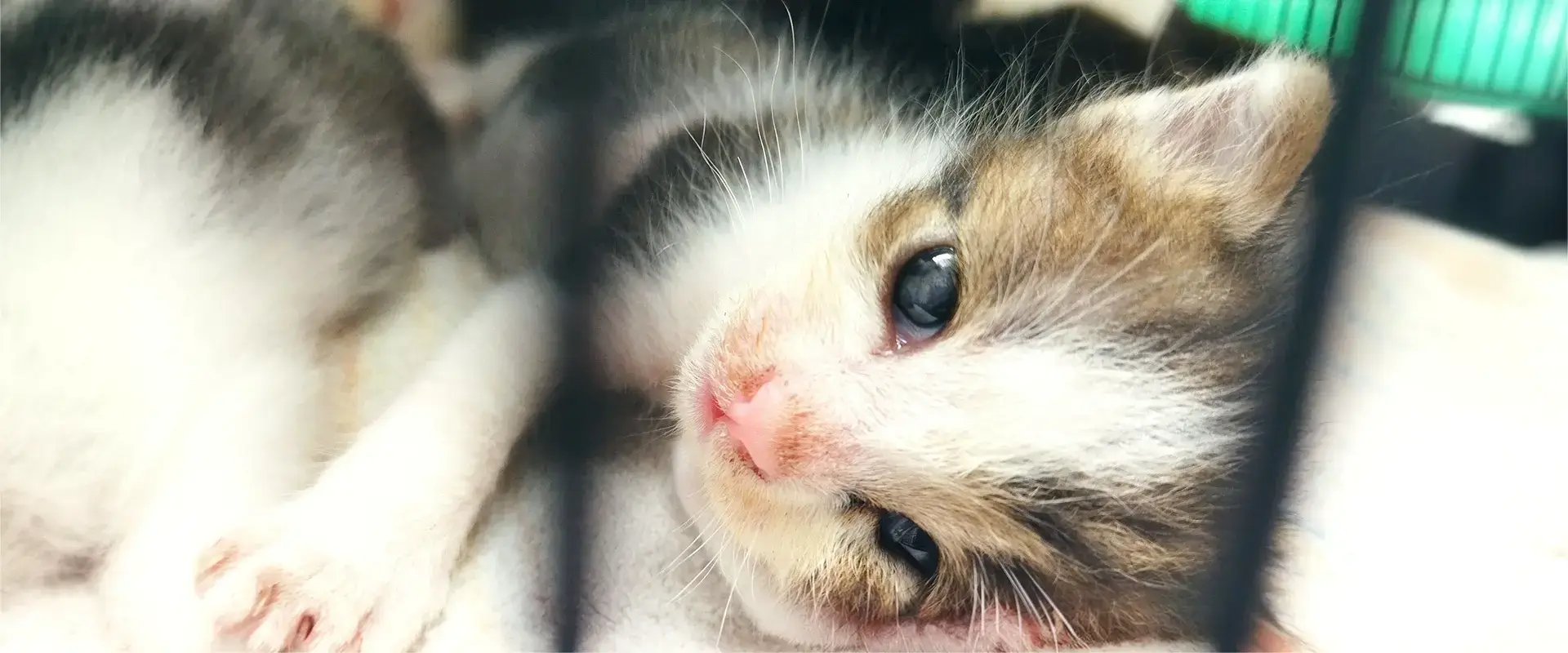
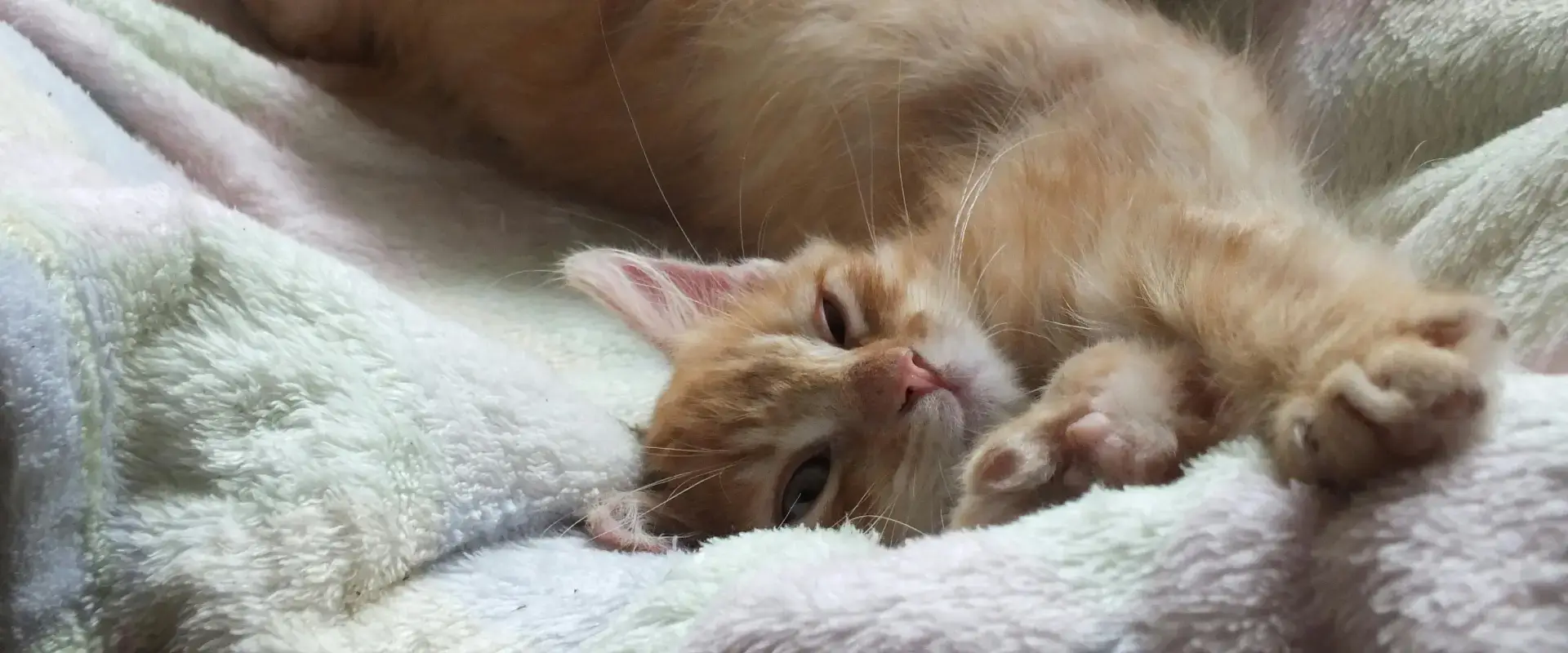
There isn’t one single answer, but the leading theories trace it back to kittenhood, when kittens knead to help stimulate their mother’s milk. Many cats keep the behaviour into adulthood, where it may be associated with comfort and contentment, scent-marking through glands in their paws, and bonding with the people and places they feel safe with.
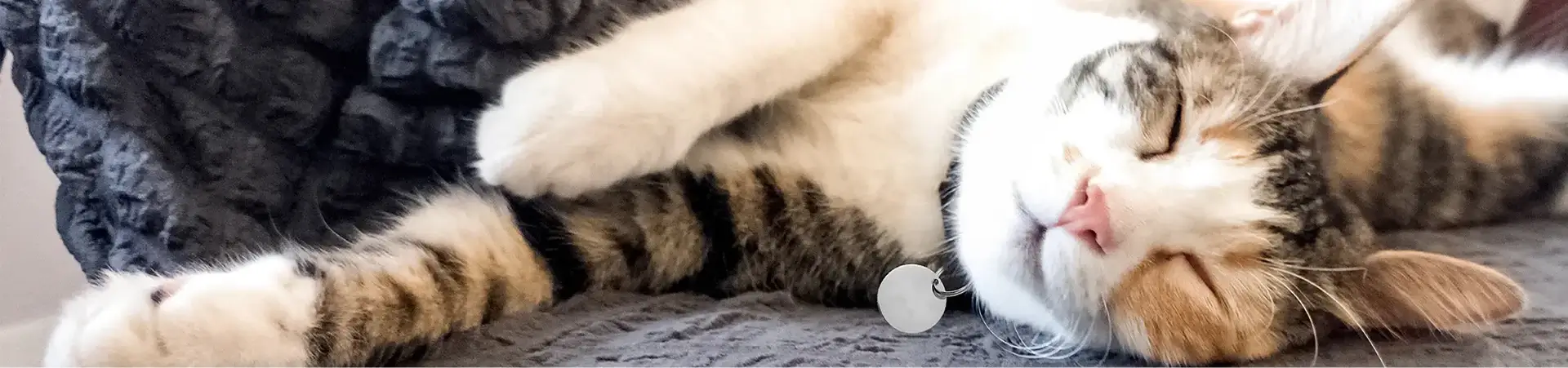
Often, yes. Cats frequently knead when they’re relaxed, such as when they’re curling up on your lap or settling into a cosy spot, and it’s commonly seen as a sign of comfort and contentment. Every cat is an individual, though, so it’s best to look at the bigger picture, including the situation they’re in, their posture, ears, tail, and other behaviours, to get a better sense of how they’re feeling.
Kneading is a normal, natural behaviour, so there’s usually no need to stop it. If your cat’s claws are a bit too prickly, pop a thick blanket down as a buffer. Keeping their claws neatly trimmed can help too (our guide to trimming your cat’s nails has tips to make the process easier for you both).
That said, if your cat suddenly starts kneading much more than usual, seems unable to stop, suckles on fabric while kneading, or seems to be injuring their paws, legs, or mouth, it’s worth discussing it with your vet.